Choosing the right truck route GPS means balancing routing control, screen readability, and facility data. The Garmin Dezl family prioritizes trucking needs with features like custom truck routing, BirdsEye satellite imagery, and access to loading dock services that help plan deliveries more efficiently. This guide highlights five top Garmin models to fit different fleets and cab sizes.
Below is a quick snapshot of five leading Garmin truck GPS devices, focusing on screen size, routing capabilities, and dock-oriented data that can impact delivery times and fuel efficiency.
| Product | Model | Screen | Key Benefit |
|---|---|---|---|
| Garmin dēzl OTR610 | OTR610 | 6-inch | Custom routing + BirdsEye Imagery |
| Garmin dzl OTR610 | OTR610 | 6-inch | Custom routing + BirdsEye Imagery |
| Garmin dezl OTR720 | OTR720 | 7-inch | Custom routing + imagery + wind speed |
| Garmin Dezl OTR500 | OTR500 | 5.5-inch | Load-to-dock guidance + PrePass |
| Garmin dēzl OTR1010 | OTR1010 | 10-inch | Big screen + BirdsEye imagery |
Garmin dēzl OTR610: 6-Inch Truck GPS With Custom Routing

The Garmin dēzl OTR610 is a compact, 6-inch truck navigator designed for drivers who need clear guidance on cramped routes. Its bright, high-resolution display makes reading maps on the road easier, while custom truck routing adjusts paths based on the truck’s size and weight. Note that this routing feature may not be available in every area, and drivers should defer to posted signs and road conditions. BirdsEye Satellite Imagery adds a bird’s-eye view of loading docks, truck entrances, and security gates to aid planning.
Drivers receive alerts for upcoming bridge heights, weight limits, sharp curves, steep grades, and other potential hazards along the route. This helps with pre-trip checks and decision-making when crossing unfamiliar corridors. BirdsEye Imagery provides high-resolution aerial views of loading docks and gate structures, supporting faster docking decisions and better space estimation.
Practical use cases include navigating tight farm-to-dock routes and edge-case detours. The OTR610’s compact footprint makes it versatile enough for different trucks and cab configurations, while quick route recalculation helps when traffic or roadwork forces a change. Regular map updates ensure the routing stays aligned with current signage and restrictions.
Practical use cases include navigating tight farm-to-dock routes and edge-case detours. The OTR610’s compact footprint makes it versatile enough for different trucks and cab configurations, while quick route recalculation helps when traffic or roadwork forces a change. Regular map updates ensure the routing stays aligned with current signage and restrictions.
Practical use cases include navigating tight farm-to-dock routes and edge-case detours. The OTR610’s compact footprint makes it versatile enough for different trucks and cab configurations, while quick route recalculation helps when traffic or roadwork forces a change. Regular map updates ensure the routing stays aligned with current signage and restrictions.
Practical use cases include navigating tight farm-to-dock routes and edge-case detours. The OTR610’s compact footprint makes it versatile enough for different trucks and cab configurations, while quick route recalculation helps when traffic or roadwork forces a change. Regular map updates ensure the routing stays aligned with current signage and restrictions.
Practical use cases include navigating tight farm-to-dock routes and edge-case detours. The OTR610’s compact footprint makes it versatile enough for different trucks and cab configurations, while quick route recalculation helps when traffic or roadwork forces a change. Regular map updates ensure the routing stays aligned with current signage and restrictions.
Practical use cases include navigating tight farm-to-dock routes and edge-case detours. The OTR610’s compact footprint makes it versatile enough for different trucks and cab configurations, while quick route recalculation helps when traffic or roadwork forces a change. Regular map updates ensure the routing stays aligned with current signage and restrictions.
Practical use cases include navigating tight farm-to-dock routes and edge-case detours. The OTR610’s compact footprint makes it versatile enough for different trucks and cab configurations, while quick route recalculation helps when traffic or roadwork forces a change. Regular map updates ensure the routing stays aligned with current signage and restrictions.
Practical use cases include navigating tight farm-to-dock routes and edge-case detours. The OTR610’s compact footprint makes it versatile enough for different trucks and cab configurations, while quick route recalculation helps when traffic or roadwork forces a change. Regular map updates ensure the routing stays aligned with current signage and restrictions.
Practical use cases include navigating tight farm-to-dock routes and edge-case detours. The OTR610’s compact footprint makes it versatile enough for different trucks and cab configurations, while quick route recalculation helps when traffic or roadwork forces a change. Regular map updates ensure the routing stays aligned with current signage and restrictions.
Practical use cases include navigating tight farm-to-dock routes and edge-case detours. The OTR610’s compact footprint makes it versatile enough for different trucks and cab configurations, while quick route recalculation helps when traffic or roadwork forces a change. Regular map updates ensure the routing stays aligned with current signage and restrictions.
Practical use cases include navigating tight farm-to-dock routes and edge-case detours. The OTR610’s compact footprint makes it versatile enough for different trucks and cab configurations, while quick route recalculation helps when traffic or roadwork forces a change. Regular map updates ensure the routing stays aligned with current signage and restrictions.
Practical use cases include navigating tight farm-to-dock routes and edge-case detours. The OTR610’s compact footprint makes it versatile enough for different trucks and cab configurations, while quick route recalculation helps when traffic or roadwork forces a change. Regular map updates ensure the routing stays aligned with current signage and restrictions.
Practical use cases include navigating tight farm-to-dock routes and edge-case detours. The OTR610’s compact footprint makes it versatile enough for different trucks and cab configurations, while quick route recalculation helps when traffic or roadwork forces a change. Regular map updates ensure the routing stays aligned with current signage and restrictions.
Practical use cases include navigating tight farm-to-dock routes and edge-case detours. The OTR610’s compact footprint makes it versatile enough for different trucks and cab configurations, while quick route recalculation helps when traffic or roadwork forces a change. Regular map updates ensure the routing stays aligned with current signage and restrictions.
Practical use cases include navigating tight farm-to-dock routes and edge-case detours. The OTR610’s compact footprint makes it versatile enough for different trucks and cab configurations, while quick route recalculation helps when traffic or roadwork forces a change. Regular map updates ensure the routing stays aligned with current signage and restrictions.
Garmin dzl OTR610: 6-Inch Truck GPS With Birdseye Imagery
The Garmin dzl OTR610 mirrors the 6-inch footprint with a bright display and a familiar interface designed for trucking. It provides custom truck routing based on vehicle size and weight, though availability may vary by region. As with other models, drivers should defer to posted signs and road conditions. BirdsEye Satellite Imagery offers high-resolution aerial views of loading docks and security gates to facilitate dock-side planning and efficient arrivals.
Alerts for bridge heights, weight limits, curves, and grades help drivers anticipate restrictions along the route. The combination of turn-by-turn directions and aerial imagery supports safer, more predictable deliveries, especially when approaching facilities with complex layouts. While the core features remain consistent with other dezl models, the OTR610’s compact form factor can be advantageous for drivers who operate multiple vehicle configurations.
In practice, the OTR610 serves fleets needing dependable routing without extraneous features. It remains a strong option for drivers prioritizing a simple, durable device that emphasizes essential truck routing and dock planning. The device pairs well with standard dispatch workflows and can be a reliable secondary navigation tool on longer hauls.
In practice, the OTR610 serves fleets needing dependable routing without extraneous features. It remains a strong option for drivers prioritizing a simple, durable device that emphasizes essential truck routing and dock planning. The device pairs well with standard dispatch workflows and can be a reliable secondary navigation tool on longer hauls.
In practice, the OTR610 serves fleets needing dependable routing without extraneous features. It remains a strong option for drivers prioritizing a simple, durable device that emphasizes essential truck routing and dock planning. The device pairs well with standard dispatch workflows and can be a reliable secondary navigation tool on longer hauls.
In practice, the OTR610 serves fleets needing dependable routing without extraneous features. It remains a strong option for drivers prioritizing a simple, durable device that emphasizes essential truck routing and dock planning. The device pairs well with standard dispatch workflows and can be a reliable secondary navigation tool on longer hauls.
In practice, the OTR610 serves fleets needing dependable routing without extraneous features. It remains a strong option for drivers prioritizing a simple, durable device that emphasizes essential truck routing and dock planning. The device pairs well with standard dispatch workflows and can be a reliable secondary navigation tool on longer hauls.
Garmin dezl OTR720: 7-Inch Truck GPS With Imagery
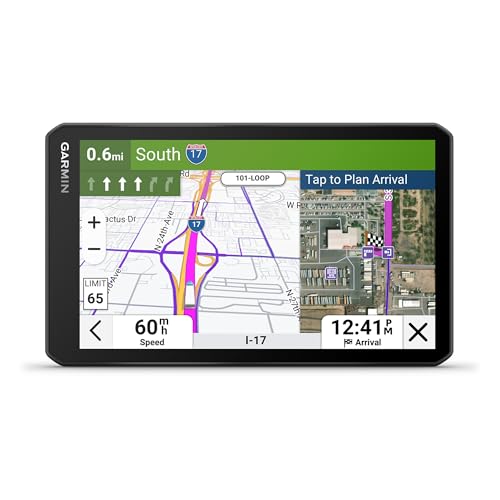
Garmin dezl OTR720 delivers a larger 7-inch display, making in-cab viewing easier for long days on the road. The unit supports custom truck routing based on your truck’s size and weight, with warnings for upcoming bridge heights, weight limits, sharp curves, and steep grades. Drivers should still rely on posted signs and road conditions. BirdsEye Direct Satellite Imagery provides high-resolution overhead views of loading docks, truck entrances and security gates for precise destination planning. Wind Speed data and community-shared docking information further assist in route and dock selection.
Color-rich imagery and route previews enable teams to evaluate parking availability near delivery points and anticipate potential bottlenecks. In urban environments, the bigger screen helps operators monitor multiple waypoints at a glance, reducing the need to flip between screens. The OTR720 is well suited for fleets that handle a mix of urban, suburban, and rural deliveries where dock access and gate layouts can impact efficiency.
In practice, the OTR720’s imagery-centric approach complements strategic planning for dock access and delivery sequencing. However, as with all navigators, drivers should confirm live conditions and signage before committing to a route through busy facilities. The model’s robust display and data layers make it a solid choice for fleets prioritizing dock-aware routing and destination visibility.
Garmin Dezl OTR500: 5.5-Inch Truck Navigator

Garmin Dezl OTR500 offers a compact 5.5-inch display designed for truck routes and dock-to-checkpoint navigation. It supports custom truck routing based on truck size and weight, with on-screen notices for upcoming bridge heights, weight limits, and sharp curves. Availability of routing customization can vary by area, so drivers should follow posted road signs and conditions. Load-to-dock guidance helps drivers move efficiently from highways to docks and gates, reducing backtracking and idle time.
Load-to-dock guidance reduces back-and-forth movements as drivers identify optimal docks and gates along the route. This model is particularly appealing for fleets seeking a smaller, cost-conscious device that still delivers essential truck routing capabilities. It pairs well with standard fleet tools and is well-suited to operations that prioritize reliability and ease of use over a large feature set.
Use-case notes include fleets that want a small, cost-efficient device without losing serious routing capability. The OTR500’s load-to-dock guidance helps reduce wait times, yet buyers should verify that the device’s regional data supports their typical lanes. It pairs well with standard fleet tools, making it a practical option for day-to-day dock-focused routing.
Use-case notes include fleets that want a small, cost-efficient device without losing serious routing capability. The OTR500’s load-to-dock guidance helps reduce wait times, yet buyers should verify that the device’s regional data supports their typical lanes. It pairs well with standard fleet tools, making it a practical option for day-to-day dock-focused routing.
Garmin dēzl OTR1010: 10-Inch Truck Navigator
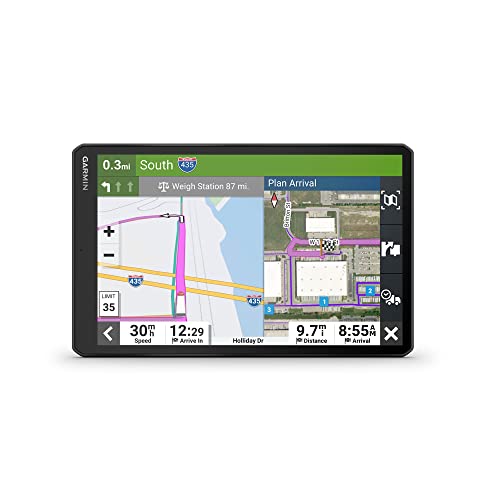
Garmin dēzl OTR1010 is a large-format, 10-inch truck navigator designed for easy in-cab viewing. It provides custom truck routing based on size and weight, enabling drivers to avoid restricted roads. As with other models, always defer to posted signs and current road conditions. BirdsEye Satellite Imagery delivers high-resolution overhead views of loading docks and security gates to enhance destination planning and docking decisions.
With a big screen comes clearer menus and easier touch navigation, helping drivers set up routes quickly. It also includes the same safety alerts for bridge heights and curves, and the imagery layer supports precise arrival planning at loading facilities. Pre-loaded maps update to reflect changes in road networks, making it a strong choice for fleets that want maximum readability and dock-oriented data in a single device.
Overall, OTR1010 blends navigation with destination-aware planning, appealing to fleets and solo operators who value load proximity and dock access. The combination of high-resolution imagery, route alerts, and dock data supports efficient trips, though users should verify live conditions when approaching complex facilities. The 10-inch display is particularly helpful for monitoring multiple drivers and destinations at a glance.
Overall, OTR1010 blends navigation with destination-aware planning, appealing to fleets and solo operators who value load proximity and dock access. The combination of high-resolution imagery, route alerts, and dock data supports efficient trips, though users should verify live conditions when approaching complex facilities. The 10-inch display is particularly helpful for monitoring multiple drivers and destinations at a glance.
Buying Guide
Key factors when selecting a truck route GPS include routing flexibility, screen size, imagery availability, and data reliability. The following considerations help compare models and align a device with operational needs:
- Vehicle profiles and routing customization: Ensure the device supports truck size and weight profiles, and verify whether custom routing works across the typical routes you run. Availability can vary by region and map data updates.
- Screen size and usability: Larger screens improve readability in moving cabs but require ample dash space and power. Balance ergonomic mounting with visibility for long-haul and urban driving alike.
- Imagery and dock data: BirdsEye Imagery and direct satellite views can improve dock planning and gate access. Confirm imagery coverage for your common destinations and loading facilities.
- Alerts and safety features: Look for bridge heights, weight limits, sharp curves, and grade warnings. Real-time alerts reduce unexpected stops and detours during deliveries.
- Dock availability and lane guidance: Some models include loading dock directories and parking availability, which can shorten wait times and streamline deliveries.
- Map updates and data freshness: Check how maps are updated and whether updates are included. Frequent updates reflect new road restrictions and new facilities.
- Power, connectivity, and durability: Heavy-duty use requires reliable mounting, power supply, and resistance to vibration. Consider whether the device supports offline maps for areas with poor connectivity.
- Fleet integration: For fleets, assess compatibility with dispatch tools and multi-user profiles. Some devices offer fleet-management features that simplify driver oversight and routing consistency.
- Price-to-value balance: Evaluate the total cost of ownership, including updates and potential subscriptions, against time savings and operational efficiency.
The models above emphasize trucking-specific routing, dock planning, and satellite imagery. When choosing, align the device with route density, facility complexity, and the size of the vehicle fleet. A larger screen and richer data layers benefit drivers handling complex deliveries, whereas smaller devices can suffice for straightforward routes with consistent facilities.