Choosing the right solar panel system for a boat can keep batteries topped off, power essential accessories, and extend time off-grid. The following five options are among the most boat-friendly, offering watertight builds, rugged mounting, and intelligent charging to protect 12V battery banks. This guide compares their wattage, MPPT capabilities, and mounting considerations to help you pick a solution that fits your vessel and cruising plans.
| Product | Brand | Wattage | Marine Use |
|---|---|---|---|
| SOLPERK Solar Panel Kit 20W | SOLPERK | 20W | Boat, Marine, RV |
| SUNER POWER Waterproof 30W Solar Charger & Maintainer PRO | SUNER POWER | 30W | Boat, Marine, RV |
| SUNER POWER 20W PRO MPPT Charger | SUNER POWER | 20W | Boat, Marine, RV |
| Extreme Max Boat Solar Charging Station | Extreme Max | 10W panel (12V/24V) | Boat, RV |
| SUNAPEX 20W 12V Solar Panel Battery Charger Maintainer | SUNAPEX | 20W | Boat, Car, Truck |
SOLPERK 20W Boat Solar Panel Kit
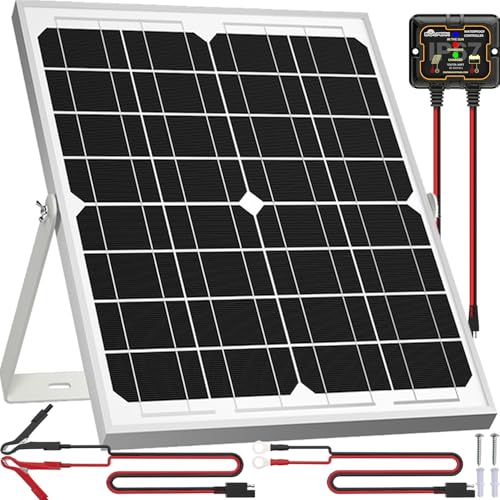
This 20W solar panel uses monocrystalline A+ cells with high conversion efficiency, designed to charge and maintain 12V batteries such as LiFePO4, Lithium Ion, AGM, SLA, and more. It is built for marine life with a low-iron tempered glass surface and a corrosion-resistant aluminum frame, rated for harsh weather and capable of withstanding up to 2400 Pa wind pressure and 5400 Pa snow load. The included upgrade 8A smart controller provides a three-stage charging cycle to prevent overcharging and short circuits, with two indicator lights showing charging status. Adjustable mounting brackets support flexible installation on boats, trailers, or decks.
- 20W monocrystalline panel with 21%-30% efficiency range
- Supports LiFePO4, Lithium Ion, AGM, SLA, GEL, and more
- 8A smart controller with three-stage charging
- Weatherproof, corrosion-resistant frame; up to 25-year lifespan
- Two indicator lights for charging status
SUNER POWER 30W Boat Solar Charger & Maintainer PRO

This 30W panel integrates Ultra-Smart MPPT technology to deliver tracking efficiency up to 99% and peak conversion up to 98%, typically providing 20%-30% more usable energy than standard controllers. The three-stage charging (Bulk, Absorption, Float) safely recharges 12V batteries and extends their life, while automatic maintenance stops charging when full and resumes when needed. It’s designed for marine environments with waterproof construction and built-in safety protections to guard against over-charge and short circuits.
- Ultra-Smart MPPT with high tracking efficiency
- Peak conversion around 98%, up to 20%-30% more energy
- Three-stage charging with maintenance mode
- Waterproof design and multiple safety protections
SUNER POWER 20W PRO MPPT Charger

This 20W solar panel is built around a built-in UltraSmart MPPT controller, offering up to 99% tracking and 98% peak conversion efficiency. The improved three-stage charging (Bulk, Absorption, Float) ensures safe, effective charging for 12V batteries with automatic resume when the battery isn’t full. It includes comprehensive safety protections—over-charge, over-discharge, over-voltage, over-current, short circuit, reverse polarity, and over-temperature—and is designed for marine use with weatherproofing for boats and RVs.
- UltraSmart MPPT with up to 99% tracking
- 98% peak conversion efficiency; 20W output
- Three-stage charging; maintenance mode
- Full safety protections; waterproof for marine use
Extreme Max Boat Solar Charging Station
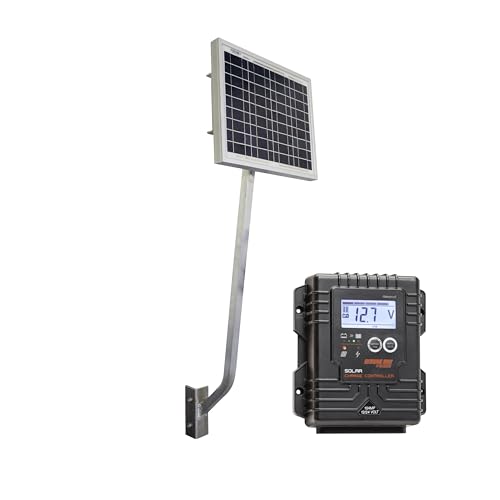
Extreme Max offers a compact, universal-fit charging station for boats, including a 10W solar panel, a digital controller, and mounting hardware. It supports 12V and 24V systems and is designed for boats, trolling motors, lifts, RVs, and camping setups. The kit uses non-damaging materials to help protect batteries and maintain a steady charge even on smaller vessels or seasonal boats. While lower wattage, it provides reliable trickle charging and simplicity for compact applications.
- Includes 10W panel and digital controller
- Supports 12V and 24V systems
- Universal fit for boats and RVs
- Durable, non-damaging construction
SUNAPEX 20W 12V Boat Solar Panel

The SUNAPEX 20W solar panel acts as a battery charger and maintainer for 12V systems, designed for boats, cars, trucks, and other vehicles. It uses a built-in charge controller to prevent overcharging and offers a portable, waterproof solution with a monocrystalline solar cell for higher efficiency. The kit is compatible with sealed lead-acid, lithium, LiFePO4, GEL, and AGM batteries. It includes practical accessories like a cigarette plug, alligator clips, and O-rings to seal connections against moisture.
- Monocrystalline cell for higher efficiency
- Built-in charge controller prevents overcharging
- All-weather waterproof and portable design
- Includes cig plug, alligator clips, and O-rings
Buying Guide
Power, System Type, and Boat Size
For boats, 12V systems are most common, but some vessels use 24V or a two-bank setup. Choose a panel that matches your battery bank’s voltage and your expected daily draw. Higher wattage panels deliver more energy for accessories and lighting, but require more space and sometimes heavier mounting. Consider your boat’s available mounting area, sun exposure, and typical cruising hours to decide whether 20W, 30W, or higher is appropriate.
Charge Controller Technology
MPPT controllers maximize energy harvest, especially in partially shaded or lower-sun conditions. Models with Ultra-Smart MPPT and high tracking efficiency (near 99%) can yield substantial gains in usable energy, but they tend to cost more than PWM-based options. For boats with larger battery banks or frequent charging needs, MPPT solutions are typically worth the investment.
Durability and Weather Resistance
Marine use demands rugged construction. Look for tempered glass, corrosion-resistant frames, and fully sealed housings. Panels built to withstand wind, rain, salt spray, and temperature fluctuations tend to last longer on deck or mounted on supports exposed to sun and spray. Check the panel’s ability to resist hail, salt, and UV exposure as well as its IP-rating if available.
Mounting, Wiring, and Installation
Mounting hardware should suit your vessel’s configuration—rail, deck, or pilothouse mounting options are common. Adjustable brackets and easy-to-route wiring help with flexible installation. If you expect to remove the panel seasonally, consider quick-disconnect connections and compact packaging. Ensure the wiring matches your boat’s fuse and battery protection scheme to avoid overloading circuits.
Battery Compatibility and Maintenance
Modern panels support a wide range of 12V chemistries, including LiFePO4, Lithium Ion, AGM, GEL, and flooded lead-acid. When mixing battery types, verify that the charger’s charging profile is compatible or choose a multi-stage controller that can adapt. Look for automatic shutoff and resume features to prevent deep discharge and to protect batteries during long storage periods.
Practicality and Budget
Evaluate the real-world needs of your boating lifestyle. A higher-wattage, MPPT-equipped kit is beneficial for longer trips and larger battery banks, while a compact, maintenance-focused option works well for smaller boats or seasonal use. Balance upfront cost against long-term energy gains, maintenance requirements, and ease of installation to determine the best fit for your boat.