Stable footing matters for comfort and safety when camping with an RV. RV stabilizer blocks create level, secure footing on uneven ground, reduce sway, and protect your tongue jacks and stabilizers from stress. This guide highlights five widely used options that cover different capacities, materials, and price points, helping you choose the right blocks for your setup. The quick table below offers a snapshot to compare at a glance, followed by detailed product sections and a practical buying guide.
| Brand | Model / Name | Capacity (per block) | Material | Notes |
|---|---|---|---|---|
| VEVOR | Trailer Jack Block (4-Pack) | 6,000 lbs | Polypropylene | Easy leveling and stacking |
| RVMATE | RV Leveling Blocks 12 Pack | Not specified | High-density reinforced polymer | Interlocking, stackable design |
| Camco | Fasten RV Big Blocks (2-Pack) | Up to 8,000 lbs | Not specified | Nesting design for storage |
| Tlaleikejia | Trailer Jack Block Set | 6,000 lbs | Polypropylene | Stackable, set of 4 |
| Kohree | RV Stabilizer Jack Pads (4-Pack) | Not specified | Solid Rubber | Waterproof, UV-resistant |
VEVOR 4-Pack Trailer Jack Blocks

VEVOR’s four-pack provides a straightforward leveling solution with a generous footprint designed to reduce wobble on irregular surfaces. Each block supports up to 6,000 pounds, enabling stable support for most single-axle trailers and small to mid-size RVs. The blocks are stackable, allowing quick height adjustments to keep your tongue jack balanced. Their polypropylene construction offers weather resistance and durability for frequent outdoor use.
- Capacity: up to 6,000 lbs per block
- Easy, rapid setup with stacking capability
- Increased footprint for improved stability
RVMATE RV Leveling Blocks 12 Pack

RVMATE’s 12-pack is designed for versatility on uneven ground, helping you park securely and reduce trailer movement. The blocks feature a durable, high-density reinforced construction with an interlocking design that keeps the stack stable during leveling. Each top surface measures 8.5″ x 8.5″, with blocks allowing stacking in multiple configurations to match your terrain and trailer height requirements.
- Interlocking, stackable blocks for flexible setups
- High-density reinforced material for durability
- Multiple blocks accommodate various leveling needs
Camco Fasten RV Big Blocks Stabilizing Jack Supports

Camco’s Big Blocks offer a robust solution for leveling jacks when the ground is uneven or out of reach. Sold as a two-pack, these blocks are designed to provide a stable foundation and can be used alone or beneath standard camper leveling blocks to expand your leveling options. They are purpose-built to minimize sway and help secure a steady camping setup.
- Capacity up to 8,000 lbs per block
- Nestable design for convenient storage
- Versatile use with various leveling systems
Tlaleikejia Trailer Jack Block Set
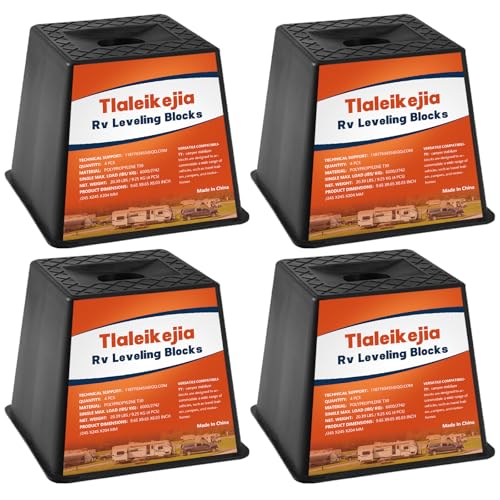
The Tlaleikejia set includes four stackable trailer jack blocks rated at 6,000 pounds per block. Constructed from durable polypropylene, these blocks are designed for repeated outdoor use and easy height adjustment through stacking. Each block measures 9.65″ x 9.65″ x 8.03″, enabling straightforward selection of the right height for uneven terrain while maintaining stability.
- Capacity: 6,000 lbs per block
- Stackable design supports flexible leveling
- Durable polypropylene construction
Kohree 4 Pack RV Stabilizer Jack Pads
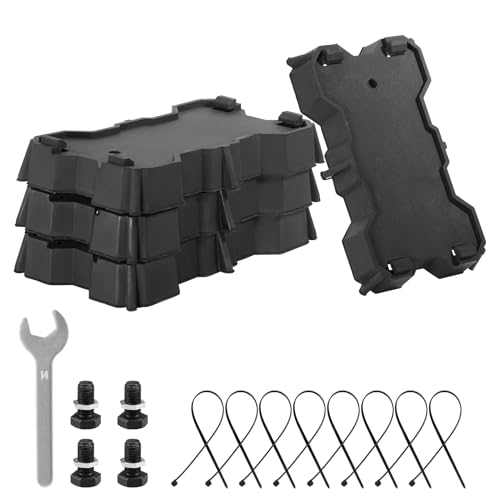
Kohree’s stabilizer pads are solid rubber blocks designed to protect scissor jacks and stabilize RV jacks on gravel, asphalt, or mud. The 4-pack is compatible with most jack feet (roughly 8.75″–9.5″ in length), offering waterproof, UV-resistant performance and a compact option for quick deployment and storage while traveling.
- Solid rubber construction for protection and durability
- Waterproof and UV-resistant with drainage on the underside
- Designed to fit common jack feet sizes
Buying Guide for RV Stabilizer Blocks
Key purchase considerations
When selecting RV stabilizer blocks, prioritize compatibility with your jack feet, the terrain you frequently encounter, and your storage needs. Consider the weight rating per block, the total number of blocks needed for your typical campsite, and whether you prefer stackable designs, interlocking systems, or rugged rubber pads. A balance between durability, ease of use, and price will help ensure reliable performance on long trips.
Capacity and load ratings
Assess the load requirements of your RV or trailer. Heavier rigs and dual-axle setups may require higher-capacity blocks (6,000–8,000+ lbs per block) or multiple blocks to distribute weight evenly. If you routinely camp on soft ground, prioritize blocks with a larger footprint and stackable options to increase stability.
Material and durability
Common materials include polypropylene, high-density reinforced polymers, and solid rubber. Polypropylene and reinforced plastics offer light weight and good weather resistance, while rubber pads excel at grip and impact absorption on mixed surfaces. UV resistance and weather sealing extend the life of blocks exposed to sun and rain.
Size, footprint, and stackability
A larger footprint increases stability on uneven ground. Check the dimensions to ensure the blocks fit under your jack feet and provide ample support without overhang. Stackable or interlocking designs simplify height adjustments and storage, reducing the risk of misalignment during setup.
Compatibility and versatility
Confirm compatibility with your tongue jack, stabilizer foot, or scissor jack feet. Some blocks work best with specific foot shapes or sizes, while universal designs can accommodate a broad range of equipment. Versatile options that double as storage or nesting components can save space in your cargo area.
Portability and storage
For frequent travelers, lighter, compact blocks are easier to transport. Look for nesting features or interlocking packs that nest compactly in your vehicle or storage compartments. Carrying a few lightweight blocks for roadside adjustments can prevent leveling issues at camp.
Price and value
Prices vary based on material, capacity, and the number of blocks in a set. When evaluating cost, consider how many blocks you need to achieve stable leveling on typical sites, as well as how often you’ll deploy them. A slightly higher upfront price may yield longer-term durability and better performance on rough terrain.