Answering the need for reliable bicycle transport when traveling by RV, these top options distribute weight safely, fit 2–4 bikes, and provide RV-friendly features. This guide highlights who each rack is best for, why it stands out, and any practical limitations. Ideal buyers include full-time RVers seeking high capacity, weekend travelers needing quick access to gear, and those prioritizing security with locking or anti-sway features.
Summary of chosen products:
- MaxxHaul Hitch Mount 4 Bike Rack (70210) — Best for versatile vehicle types and simple, swing-down access.
- Thule Range Hanging Bike Rack — Best for RV travel with integrated locks and stable anti-sway design.
- Upgrade 2.0 Hitch Bike Rack — Best for high capacity with secure straps and tilt for rear access.
- Hollywood RV Rider Hitch Bike Rack — Best for two electric bikes with security and rugged build.
- ARKSEN Bike Rack Hitch — Best for 2 bikes with easy tilt and 150 lb total capacity.
MaxxHaul Hitch Mount 4 Bike Rack 150 lb Capacity
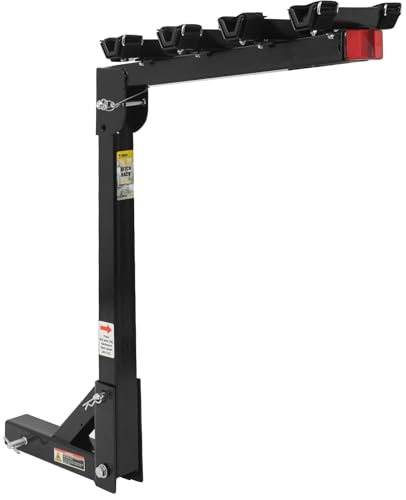
Best for families or groups needing to transport up to four bikes with a single hitch. This swing-down design provides easier rear access when the rack is deployed, which is helpful for campers with limited space behind the vehicle. The rack supports up to 150 lbs total and includes a hitch pin for secure attachment. Adjustable hold-down straps help stabilize bikes during travel. A rear reflector adds visibility for nighttime road use.
Who it’s best for: RVers who want a straightforward, affordable option that fits cars, trucks, SUVs, minivans, and vans with a receiver hitch. Limitation: swing-down clearance can be cramped if you have a very tall trailer or roof height, and heavier bikes should be mounted first to balance weight.
Thule Range Hanging Bike Rack

Best for RV travel requiring stable bike transport with built-in security. The Thule Range is designed to hold up to four bikes and uses anti-sway cradles to minimize movement during transit. It also features quick attachment with ratcheting straps for fast securing. The integrated locks help deter theft while away from the vehicle.
Who it’s best for: RV owners who prioritize bike stability and theft deterrence on rough roads or long trips. Caution: some assembly and mounting steps may require careful attention to fit a variety of hitch configurations.
Upgrade 2.0 Hitch Bike Rack

Best for heavy-duty, high-capacity transport with secure load management. This rack offers a total capacity of 240 lbs across four bikes in a 2″ receiver, with a per-bike limit of 60 lbs and per-side limit of 120 lbs. It uses SGS-certified rubber straps and includes stabilizer and tie-down straps to hold bikes firmly, even on irregular roads. The design is relatively lightweight for its capacity and folds for storage. A tilt feature allows rear access without removing bikes.
Who it’s best for: RV travelers carrying heavier or multiple bikes, including fat tires, who want a high-strength, space-conscious carrier. Limitation: ensure each bike does not exceed the 60 lb per-bike limit, and plan loading order to maximize stability.
Hollywood RV Rider Hitch Bike Rack for 2 E-Bikes
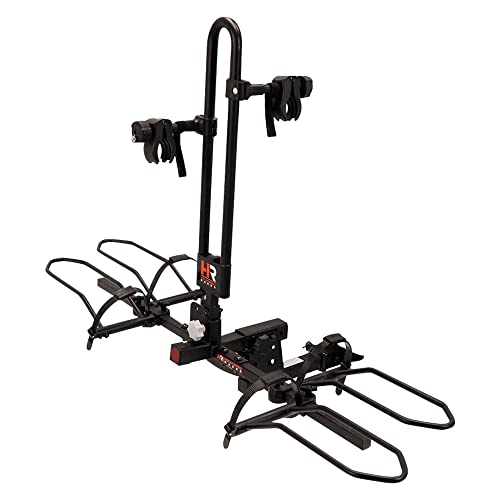
Best for electric bikes or heavy-duty RV setups that require robust support. This rack is designed to carry two e-bikes up to 80 lbs each (total 160 lbs) with secure wheel holders, frame grabbers, and a theft-deterrent cable. A hitch tightener enhances stability, and the rugged construction is built to withstand frequent travel with heavier bikes.
Who it’s best for: RV owners transporting two e-bikes or other heavy frames. Caution: higher weight capacity can mean heavier installation effort and slightly bulkier rack profile.
ARKSEN Bike Rack Hitch for Car

Best for two-bike setups with a focus on tilt-and-access. The ARKSEN platform rack fits 2″ hitch receivers and carries up to 150 lbs total. It’s suitable for SUVs, trucks, vans, and RVs seeking a balanced, tilt-down experience for trunk access. Its design accommodates bikes up to about 5.5″ wide tires, making it a practical option for fat tires.
Who it’s best for: RV owners who want a straightforward 2-bike solution with tilt-down access and wide tire compatibility. Limitation: not ideal if you need to carry three or four bikes at once.
Buying Guide
What’s the right capacity for your RV trips?
Consider how many bikes you typically transport and the weight of each bike. If you regularly haul two e-bikes or fat-tire bikes, opt for racks with higher per-bike limits (up to 60 lbs per bike) and total capacity around 240 lbs. For lighter, non-motorized bikes, a 150–200 lb total capacity can be sufficient.
Do you need rear access when loaded?
Tilt and swing features allow trunk access with bikes mounted. If you frequently need access to cargo space, prioritize racks with a tilt-down or swing-away design. Note potential clearance requirements when swung open on certain vehicles.
Security features matter?
Look for integrated locks, anti-sway cradles, and locking cables or hitch tighteners. These features help deter theft and reduce bike movement on rough roads. Some models include wheels straps with stronger materials for long-term durability.
Which installation and compatibility considerations apply?
Ensure the rack fits your receiver size (commonly 2″). Check whether your RV, SUV, or van has sufficient clearance for bike height and rack protrusion, especially with mounted e-bikes or fat tires. Some racks fold for storage when not in use, saving space in compact RV garages.
Material and durability considerations
High-strength steel with corrosion-resistant coatings tends to last longer on road trips. Rubber straps should be SGS-certified for wear resistance, and anti-sway designs improve stability during travel. For RV riders, a sturdy build reduces the risk of fatigue or breakage over long trips.
Practical tips for choosing
- Prioritize models with clear weight limits and per-bike capacities to prevent overloading.
- Choose a design that matches your typical vehicle type—SUV, van, truck, or motorhome.
- Consider ease of installation, storage footprint, and how often you need rear access.
FAQ
- What is a common hitch size for RV bike racks? Answer: Most RV hitch bike racks use a 2-inch receiver, but always verify receiver compatibility with your vehicle.
- Can I transport fat-tire bikes on these racks? Answer: Some models accommodate tires up to 5.5 inches wide; verify tire width and frame clearance per product specs.
- Are anti-sway features important? Answer: Yes, anti-sway cradles reduce bike movement and protect racks and vehicles on rough roads.
- Is rear access possible with bikes loaded? Answer: Tilt or swing designs enable trunk access without removing bikes, but clearance varies by vehicle.
- Should I lock bikes to the rack? Answer: Integrated locks or security cables improve theft deterrence, especially when leaving bikes unattended.
- What should I do to maintain the rack? Answer: Regularly inspect straps and mounting hardware, clean corrosion-prone areas, and store folded racks in a dry place when not in use.