The best onboard air system depends on what you need to inflate: the VIAIR Constant Duty OBA is best for off-road tire reinflation, while the VIAIR High-Flow Air Source Kit suits air horns and occasional inflation. The 2.5-gallon medium-duty kit offers a larger tank and included fittings, VEVOR is a compact option for horns and small inflatables, and RETRUE is designed for in-cab air-bag adjustment. Compare tank size, pressure, duty cycle, and intended use before choosing.
| System | Best for | Tank or pressure detail |
|---|---|---|
| VIAIR Constant Duty OBA | Off-road tire reinflation | 2.5-gallon tank; 150 PSI |
| VIAIR High-Flow Air Source Kit | Air horns and light inflation | 2-gallon tank; 150 PSI |
| Medium Duty Onboard Kit | Air horns and general onboard air | 2.5-gallon tank; 150 PSI |
| VEVOR 12V Compressor | Compact horn and inflatable use | 0.8-gallon tank; 90–120 PSI |
| RETRUE Air Bag Compressor | In-cab air-bag adjustment | Up to 100 PSI |
VIAIR Constant Duty OBA
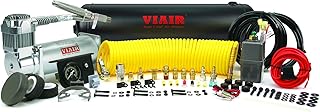
Best for: Off-road drivers who need to reinflate tires after airing down. This 12-volt system pairs a 450C compressor with a 2.5-gallon tank and a 150 PSI maximum working pressure. The listed flow rate is 1.8 CFM, and the manufacturer states it can fill a 37-inch tire from 15 to 30 PSI in four minutes.
The 100% duty cycle at 100 PSI is a useful differentiator for longer operating sessions. The setup is intended for Jeeps, trucks, and other 4×4 vehicles. Choose it if tire reinflation is a priority; its stated tire size and performance details make its intended role clearer than a general-purpose horn kit. The listing does not provide dimensions or weight, so check available mounting space before buying.
VIAIR High-Flow Air Source Kit

Best for: Drivers who want a tank-mounted setup for air horns, suspension, or light pneumatic tasks. It combines a 280C compressor with a 2-gallon tank rated to 150 PSI. The product information says it can fill the tank from zero to 145 PSI in three minutes and 40 seconds, and describes the system as having a quick recovery rate.
This kit can also top off tires and inflate items such as bike tires, beach toys, and camping mattresses. Its stated limitation is important: it is not intended to fill truck tires from flat to full. Choose it for air horns and supplemental air needs rather than frequent full-size tire inflation.
Medium Duty 2.5-Gallon Air System

Best for: Buyers seeking a 12-volt compressor and larger tank with fittings and wiring components included. The compressor has a 150 PSI maximum working pressure, a 33% duty cycle at 100 PSI, and a listed maximum draw of 25 amps. The 2.5-gallon tank has five 1/4-inch NPT ports.
The package lists a pressure switch set to 120–150 PSI, a 40-amp relay, an inline-fuse-holder wire, a safety valve, a drain cock, a six-foot air line, and tank mounting hardware. These included pieces can help with system setup, but buyers should verify that the listed ports, fittings, and wiring suit their planned installation. Its 33% duty cycle makes it a less suitable choice for extended, continuous compressor use.
VEVOR 0.8-Gallon Compressor Kit
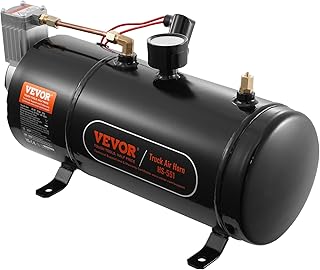
Best for: Buyers who want a compact tank system for train horns, tire inflation, or air mattresses. This 12-volt kit includes a 0.8-gallon tank, compressor, and pipe set. Its stated operating range is 90–120 PSI, with automatic inflation below 90 PSI and shutoff above 120 PSI. A gauge is included for pressure monitoring.
The listing also describes a steel tank with an anti-rust coating, a drainage plug, and fuse protection. Its smaller tank is a practical size consideration: choose it when a compact setup is more important than storing as much compressed air as a 2- or 2.5-gallon system. The listed maximum pressure is lower than the 150 PSI systems in this comparison.
RETRUE Air Bag Compressor System

Best for: Drivers who want to adjust air bags from inside the cab. The system is designed for air-bag suspension applications and lists compatibility with vehicle makes including Ford, Chevrolet, GMC, and Dodge. It reaches up to 100 PSI and uses a press-and-hold control, so the compressor runs while the button is held.
The manufacturer lists inflation times of 80 seconds to 50 PSI, two minutes and 10 seconds to 70 PSI, and three minutes and 50 seconds for full inflation. This system is more specialized than the tank-based kits above; choose it for air-bag adjustment rather than assuming it is a general-purpose tank system. The product information advises contacting the seller if the air gauge has an issue.
Buying Guide: How to Choose an Onboard Air System
What will you use the system for?
Start with the main job. Off-road tire reinflation favors a system with stated tire performance and a suitable duty cycle, such as the VIAIR Constant Duty OBA. Air horns and intermittent inflation may call for a tank-based air source kit. For driver-seat suspension adjustments, the RETRUE system is specifically designed around air bags and in-cab control.
How much tank capacity do you need?
A larger tank stores more compressed air between compressor cycles, but tank size alone does not determine how quickly a system completes a task. The listed options range from 0.8 gallon on the VEVOR kit to 2.5 gallons on the medium-duty and Constant Duty systems. Compare tank capacity with compressor output and your intended use.
Why do pressure and duty cycle matter?
Maximum pressure indicates the system’s stated pressure limit, not whether it suits every tool or tire task. Check the required pressure for your equipment. Duty cycle describes how long a compressor can operate under specified conditions. The medium-duty kit lists 33% at 100 PSI, while the Constant Duty OBA lists 100% at 100 PSI, making their operating profiles different.
What should you check before installation?
Confirm available mounting space, electrical requirements, included fittings, hose connections, and the installation instructions. The medium-duty kit lists its dimensions and a 25-amp maximum draw; the VIAIR Constant Duty listing does not provide system dimensions or weight. Verify that the chosen kit’s ports and controls match your planned setup.
Frequently Asked Questions
Can an onboard air system inflate tires?
Yes, some systems are intended for tire inflation. Check the product’s stated capability: the VIAIR Constant Duty OBA lists performance for a 37-inch tire, while the VIAIR High-Flow kit is described for topping off tires rather than filling truck tires from flat.
Is a larger air tank always better?
No. A larger tank stores more air, but the right choice depends on mounting space, compressor output, and the task. A smaller tank may suit air horns or compact installations, while larger tanks may better fit repeated air demands.
What does a compressor duty cycle mean?
Duty cycle indicates the share of a specified period that a compressor can operate under stated conditions. Compare the rating at its stated pressure, since duty-cycle figures at different pressures are not directly equivalent.
Can one onboard air system run air horns and inflate tires?
Some kits are marketed for both air horns and tire inflation, but capability varies. Review the product’s pressure, tank capacity, and stated tire-use limitations before relying on it for both tasks.
Does every onboard air system include a tank?
No. Check the package contents carefully. The five systems compared here list tanks, but onboard compressors can be sold in different configurations.