Oil leaks from aging engines can be persistent and costly. The right oil stop leak product can slow leaks, extend oil life, and help avoid major repairs. This guide covers five reliable brands and formulas, highlighting how each works, where it shines, and how to use them safely. Whether you drive a high-mileage gasoline engine or a modern turbocharged setup, these options offer different balances of seal restoration and leak sealing. Use the buying guide at the end to compare features and choose the best fit for your vehicle.
| Product | Brand | Size | Key Benefit |
|---|---|---|---|
| Lucas Oil 10279 Stop Leak | Lucas Oil | 1 Gallon | Broad compatibility; reduces consumption; raises oil pressure |
| Bar’s Leaks 1010 Concentrate | Bar’s Leaks | 11 oz | Stops & seals leaks; restores gaskets; dosage per oil capacity |
| Bar’s Leaks OS-1 | Bar’s Leaks | 16.9 oz | Repairs main seals; renews valve seals |
| BlueDevil 49499 Oil Stop Leak | BlueDevil Products | 8 oz | Easy to use; permanent seal; engine compatible |
| ATP AT-205 Re-Seal | atp automotive | 8 oz | Professional strength resealer; seals multiple systems |
Lucas Oil 10279 Stop Leak — 1 Gallon
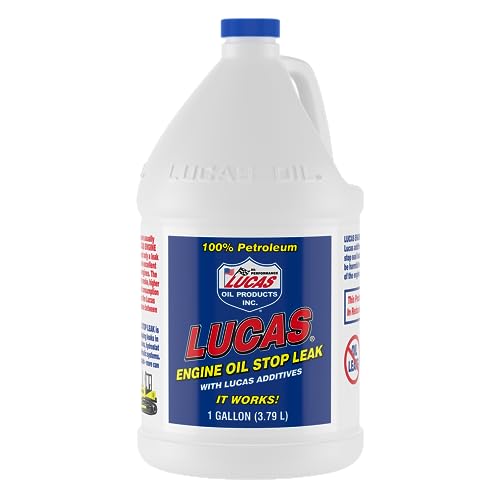
Lucas Oil 10279 Engine Oil Stop Leak is formulated to work with petroleum, semi-synthetic, and full synthetic oils. This 1-gallon container is suited for ongoing maintenance on average to high-mileage engines, aiming to reduce oil consumption and engine noise while helping maintain oil pressure. The product is designed to be compatible with a wide range of motor oils, and it is produced without harmful solvents.
- Compatible with petroleum, semi-synthetic and full synthetic motor oils
- Contains no harmful solvents
- Reduces engine noise and oil consumption
- Aims to maintain oil pressure
For everyday use, add during an oil change or after a drain-and-fill cycle. While it does not replace mechanical repairs, it can help manage minor seal leaks and extend oil life on many engines. Users should follow bottle directions and monitor the oil level after initial treatments. If leaks persist or worsen, seek professional inspection instead of continuing with additives alone.
Bar’s Leaks 1010 Stop Leak Concentrate
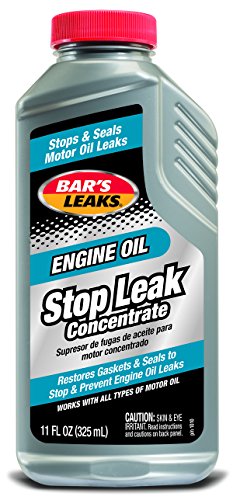
Bar’s Leaks 1010 Engine Oil Stop Leak Concentrate is designed to stop leaks and seal gaskets affected by normal engine wear and age. One bottle treats up to 5 quarts of oil, making it a practical option for a single-occupant oil system or small-to-mid sized engines. For larger systems, use one bottle per 5 quarts of oil capacity. On smaller four-stroke engines, dosing guidance is approximately 2 ounces per quart of capacity.
- Stops and seals motor oil leaks
- Restores gaskets and seals
- Prevents engine oil leaks; dosing varies with oil capacity
- Treats up to 5 quarts per bottle; adjust for engine size
- Application timing: around oil changes
This concentrate aims to seal leaks rather than permanently alter seals. It is often chosen for engines with early-stage leaks or gasket wear. Users should observe results over a short drive period and re-evaluate if leaks persist after the initial application.
Bar’s Leaks OS-1 Oil Seal Engine Oil Burning and Leak Repair

Bar’s Leaks OS-1 Oil Seal Engine Oil Burning and Leak Repair is designed to work in a broad range of gasoline and diesel engines, including turbocharged and modern platforms. It focuses on sealing and renewing worn seals and guides, making it suitable for engines showing minor to moderate seal wear. The formula targets leaks around main seals and helps reduce oil burning in typical heavy-use setups.
- Repairs leaking main seals and gaskets
- Renews worn valve seals and guides
- Stops oil burning and blue exhaust smoke
- Suitable for a wide range of engines, including turbocharged and hybrid setups
With OS-1, users should follow dosage guidelines for their engine size and monitor oil consumption after treatment. It is intended as a maintenance product rather than a substitute for major seal failures or mechanical repair.
BlueDevil Oil Stop Leak — 8 Ounce

The BlueDevil Oil Stop Leak is designed for ease of use. Simply pour the recommended amount into the leaking component’s oil sump or crankcase according to the instructions. The product aims to provide a permanent seal that remains stable after many miles of driving, while remaining compatible with gasoline and diesel engines alike.
- Easy to use: pour-and-go application
- Permanent seal; seeks lasting leak closure
- Compatible with gasoline and diesel engines
The formulation emphasizes a durable seal, which can be advantageous for vehicles with moderate leaks or ongoing minor seepage. As with all leak-stop products, results depend on leak size, location, and engine condition, and persistent leaks may require professional evaluation.
ATP AT-205 Re-Seal Stops Leaks

ATP AT-205 Re-Seal Stops Leaks is a professional-strength resealer that focuses on rejuvenating rubber seals and gaskets across engines, transmissions, power steering, differentials, and hydraulic systems. It is compatible with conventional and synthetic oils, as well as ATF, gear oil, power steering fluids, and hydraulic oils. The product is designed to act quickly and address a broad range of leak sources.
- Professional strength fast-acting resealer
- Rejuvenates rubber seals & gaskets across multiple systems
- Compatible with conventional and synthetic oils, ATF, gear oil, and hydraulic fluids
When using AT-205, follow the recommended dosage and ensure the vehicle is well-maintained. While it can help with many leaks, it is not a substitute for addressing serious seal damage or mechanical issues, and continuous leaks may require inspection by a technician.
Buying Guide
Choosing the right oil stop leak product depends on engine type, leak location, and maintenance goals. The five options above vary in formulation, size, and scope of use, so consider these key purchase factors when comparing brands and dosages:
- Engine compatibility: Most products work with gasoline engines; verify if diesel, turbocharged, or high-mileage setups require a specific formulation.
- Leak location and severity: Small seepage may respond to a concentrate or seal conditioner, while main-seal leaks or burning oil often need a dedicated seal-repair formula.
- Oil type and viscosity: Check compatibility with conventional, synthetic, or blend oils to ensure the product does not conflict with the oil chemistry.
- Size and cost-per-ounce: Larger containers may reduce per-ounce cost but require longer-term use. Consider how frequently you service your vehicle.
- Usage instructions: Follow dosage guidance relative to oil capacity and oil change intervals. Some products are best added during an oil change; others can be used mid-cycle.
- Repair vs. maintenance: Seal restorer products aim to slow leaks and renew seals, but persistent leaks from worn components often demand mechanical repair.
- Vehicle age and condition: High-mileage engines with multiple leaks may benefit from a multi-brand approach, while newer engines may respond to lighter-duty formulations.
- Safety and compatibility: Ensure the product is compatible with your engine materials and does not interfere with emissions systems or catalytic converters.
- Application impact: Some formulas can alter oil color or affect filter performance briefly; monitor oil quality after treatment.
- Warranty and manufacturer guidance: Use products as directed and seek professional advice if you’re unsure about applying a leak-stop solution.
In sum, select a product whose claims align with your engine type, leak severity, and maintenance plan. For high-mileage vehicles with recurring leaks, OS-1 and seal-repair focused options can be more effective, while lighter leaks may respond well to easy-to-use concentrates or generalized stop-leak additives. Always prioritize safety and professional assessment when leaks persist or worsen after treatment.