When riding, every mile can bring unexpected injuries or emergencies. A well-stocked motorcycle first aid kit reduces response time and supports rider safety. This guide reviews five top kits chosen for riders, hikers, and travelers who value compact, organized, and durable medical supplies. Each pick offers portable handling, clear labeling, and a broad array of essentials—from bandages to trauma supplies. Compare size, weight, compartments, and mounting options to select the best motorcycle first aid kit for your rides and adventures.
| Product | Brand | Key Feature |
|---|---|---|
| Rescue Essentials Motorcycle Operator IFAK | Rescue Essentials | Catastrophic trauma supplies, scene safety, compact |
| Pasenhome First Aid Kit with Labelled Compartments | Pasenhome | Labelled organization, MOLLE compatibility, portable |
| EVERLIT 250 Pieces Survival First Aid Kit IFAK | EVERLIT | 250 pieces, MOLLE pouch, water-resistant |
| Carlebben EMT Pouch MOLLE Ifak Pouch | Carlebben | MOLLE system, water-resistant, organized pockets |
| Mini First Aid Kit – 150 Piece (Vriexsd) | Vriexsd | Compact, waterproof, 150 pieces, portable |
Rescue Essentials Motorcycle Operator IFAK

The Rescue Essentials Motorcycle Operator IFAK is designed for riders and recreational cyclists, focusing on catastrophic trauma and scene safety. It offers a compact footprint suitable for mounting on a motorcycle or fitting into a saddlebag, while providing supplies to address severe injuries and common traumatic scenarios. The kit remains portable and easy to access, making it a practical option for on-bike emergency readiness. Its compact design does not sacrifice essential items needed to address life-threatening scenarios on the road.
Pasenhome First Aid Kit With Labelled Compartments

Pasenhome offers a labeled, organized first aid kit built around quick access and efficiency. The kit uses 600D ripstop polyester and a durable MOLLE-compatible system, enabling secure attachment to backpacks or belts for riders who prefer hands-free carrying. Its compact dimensions (7.9″ x 5.9″ x 3.6″) and light weight (about 1.3 lbs) make it a versatile option for motorcycle trunks, panniers, or gear bags. The labeling helps identify items quickly, reducing search time during emergencies and enabling rapid response.
EVERLIT 250 Pieces Survival First Aid Kit IFAK
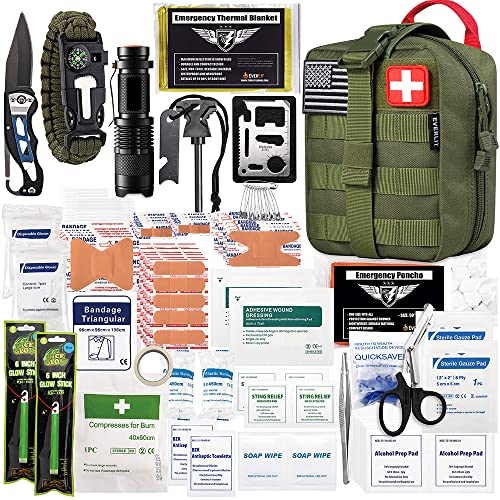
The EVERLIT kit is a robust option for riders who want substantial coverage for emergencies. With 250 pieces, it includes trauma supplies and standard first aid items, packaged in a MIL/EMT-style MOLLE pouch. The kit uses 1000D water-resistant nylon and offers three large compartments for organized access. Its capacity and rugged construction suit long rides, camping trips, and emergencies in remote areas where durable gear is essential. The MOLLE compatibility allows easy mounting to backpacks, vests, or bike storage systems.
Carlebben EMT Pouch MOLLE Ifak Pouch
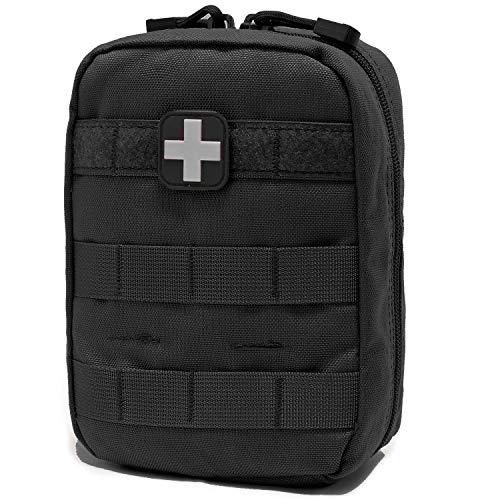
The Carlebben EMT Pouch emphasizes portability and modular organization. With a MOLLE system, it attaches to gear, backpacks, or vehicle-mounted panels, expanding on-bike readiness. The kit includes 180 essential medical supplies and a well-structured interior with pockets and elastic straps for quick item retrieval. Its water-resistant pouch and a durable, two-way zipper design support use in varying weather and riding conditions, offering a practical balance of capacity and accessibility for riders who want a reliable compact kit.
Mini First Aid Kit – 150 Piece (Vriexsd)
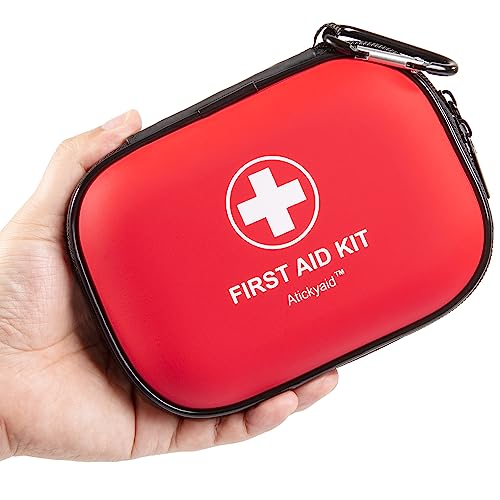
The Vriexsd Mini First Aid Kit provides a compact 6.4″ x 4.9″ x 2.7″ package with 150 pieces and a hard-shell, waterproof design. Weighing about 0.73 lbs, it’s easy to stash in a motorcycle trunk or saddlebag for ready access during trips. The kit emphasizes travel readiness, with latex-free supplies and a travel-friendly layout that makes it simple to locate essential items quickly. Its compact size suits riders who want a lightweight, grab-and-go option for personal use or as a backup kit within broader gear sets.
Buying Guide
Key considerations help riders choose the right kit for their needs:
- Intended use: For daily commuting, a compact kit with quick access to trauma supplies may suffice; for long tours, a larger kit with more diverse supplies offers better preparedness.
- Mounting and portability: Look for MOLLE compatibility, belt or saddlebag attachment, and overall weight to ensure the kit won’t burden you on the road.
- Organization: Labeled compartments and clearly organized pockets speed item retrieval during stress. Labels help distinguish bandages, gloves, antiseptics, and trauma gear.
- Contents and expandability: A kit should cover essential first aid needs, with room to add items for personal health, allergies, or family members. Consider OSHA or safety-standard alignment where applicable.
- Durability and weather resistance: Water-resistant or waterproof cases protect supplies in rain or humidity. EVA or 1000D nylon housings improve durability on rugged terrains.
- Accessibility and color coding: High-contrast colors and simple layouts reduce retrieval time in emergencies. Easy-to-grab zippers and silent pulls can help in noisy environments.
- Versatility: Kits that double as MOLLE pouches or attach to backpacks, vests, or motorcycle panniers provide flexible solutions for varied rides.
- Value and warranty: Consider kit contents, replacement parts, and warranty terms when evaluating cost versus coverage over time.
- Regulatory considerations: Some kits or items may be eligible for HSAs or FSAs in the US, which can influence long-term budgeting for healthcare supplies during trips.