Selecting the right marine battery for starting an outboard and powering onboard electronics depends on chemistry, capacity, temperature performance, and maintenance needs. The following five options offer strong starting power and deep-cycle capability, with features such as self-heating for cold starts, built-in Battery Management Systems (BMS), and Bluetooth monitoring. This guide compares LiFePO4 and AGM technologies to help you choose a battery that fits your boat, engine size, and electrical load.
| Product | Brand | Chemistry | Capacity (Ah) | CCA | Key Features |
|---|---|---|---|---|---|
| LiTime 140Ah Lifepo4 Dual Battery | Litime | LiFePO4 | 140 | 1000 | Self-heating, Bluetooth monitoring, Group 31 drop-in |
| Wattcycle 100Ah LiFoDual Battery | Wattcycle | LiFePO4 | 100 | 1200 | Self-heating, Bluetooth, built-in 200A BMS, IP67 |
| Weize 110Ah AGM Dual Battery | WEIZE | AGM | 110 | 825 | Dual-purpose, quick charge capability |
| Interstate 100Ah Marine AGM | Interstate Batteries | AGM | 100 | 925 | Deep-cycle power, long life |
| UPLUS 92Ah AGM Dual Battery | UPLUS NEW TECHNOLOGY BATTERY | AGM | 92 | 800 | Dual-purpose, vibration resistance |
Note: All five options balance starting performance with electronics support, while offering different chemistry and design philosophies. When selecting a battery, consider your boat size, engine horsepower, cruising electronics, charging system, and the space available for installation.
LiTime 140Ah Lifepo4 Dual Battery
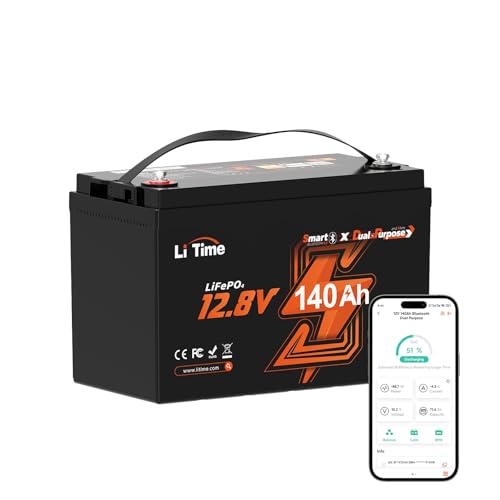
The LiTime 140Ah LiFePO4 dual-purpose battery combines strong starting power with deep-cycle capability for marine electronics. It delivers up to 1000 CCA to help crank engines in challenging conditions while supporting onboard devices, navigational systems, and trolling motors. Self-heating technology activates in cold weather to maintain charging efficiency, extending usable life in winter or high-latitude conditions. A built-in Bluetooth module lets boaters monitor state of charge, voltage, and health from a smartphone, reducing guesswork during long trips. The battery is designed as a drop-in replacement for Group 31 lead-acid units, simplifying upgrades without major rewiring.
- Self-heating from -20°C to 5°C
- Smart Bluetooth monitoring
- Group 31 drop-in for lead-acid replacements
Due to its lithium-iron-phosphate chemistry, it offers longer cycle life and improved efficiency compared with traditional flooded or AGM batteries, making it a strong long-term choice for boats with electronics-heavy setups.
Wattcycle 100Ah LiFePO4 Dual Battery

The Wattcycle 100Ah dual-purpose LiFePO4 battery is engineered for both starting and electronics loads. It delivers 1200 CCA and 1500 MCA, ensuring reliable ignition for demanding outboard engines while powering fish finders, radios, and lighting. A compact form with dual-terminal design makes wiring straightforward for boats requiring clean, organized power distribution. The battery integrates a robust 200A Battery Management System (BMS), Bluetooth 5.0 connectivity for real-time data, and an IP67 waterproof rating. Self-heating begins below freezing to keep performance consistent in cold climates, and a forced-start feature provides an extra assurance during harsh conditions.
- 1200CCA / 1500MCA for cold starts
- Built-in 200A BMS and Bluetooth monitoring
- Self-heating and IP67 protection
With its EV-grade cells and reliable cold-weather performance, this Wattcycle model is a strong all-around option for saltwater and freshwater vessels that demand both cranking power and robust auxiliary capacity.
Weize 110Ah Group 31M AGM Dual Battery

The Weize 110Ah Group 31M AGM dual-purpose battery is built for both starting and deep-cycle loads. Its AGM construction minimizes maintenance and supports consistent performance across endurance tasks on a boat, RV, or other marine platforms. The design emphasizes high-output power with low internal resistance, contributing to reliable starts and steady accessory power. Quick charging is a key feature; users can top up efficiently with a relatively high charge rate (14.4V ± 0.1V, up to about 21A) while following guidance to avoid extended charging beyond 24 hours. This model aims for a balanced, versatile marine power solution.
- Dual-purpose design for starting and deep cycle
- Low internal resistance for steady performance
- Relatively quick charging capability
As an AGM battery, it offers solid vibration resistance and cleaner maintenance compared with flooded lead-acid options, making it suitable for saltwater boats and rugged marine environments.
Interstate 100Ah Marine AGM Deep Cycle Battery

Interstate’s Marine Deep Cycle AGM battery focuses on extended power delivery and reliability for boating systems. Engineered with thick plates to support repeated discharges, it prioritizes a steady supply to the motor and all onboard electronics, from depth finders to integrated audio setups. The AGM construction provides a sealed, maintenance-free option with improved vibration resistance and longer service life compared with traditional flooded batteries. It’s designed to deliver multiple cycles without rapid degradation, offering dependable power for demanding outings and heavy-use marine electronics.
- Extreme deep-cycle capability
- 2x–3x longer life than traditional flooded batteries
- Pure lead AGM construction for durability
UPLUS 92Ah Dual Purpose AGM Battery
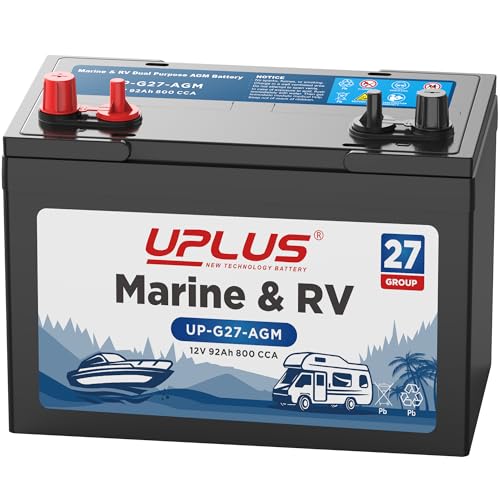
UPLUS’s Group 27M dual-purpose marine battery provides 92Ah of capacity with 800CCA, designed to handle both engine starting and deep-cycle needs. The dual-purpose design reduces the need for two separate batteries, saving space and simplifying installation on boats with limited battery boxes. UPLUS emphasizes robust vibration resistance, which helps withstand the rigors of rough seas and road vibrations during transport. This AGM option offers reliable performance for navigation devices, lighting, and engine start systems while remaining maintenance-free.
- Starts engines up to 350HP
- Space-saving dual-purpose design
- Extreme vibration resistance
Buying Guide
Battery Chemistry: LiFePO4 vs AGM
Two common marine battery chemistries are LiFePO4 (lithium iron phosphate) and AGM (absorbent glass mat). LiFePO4 offers lighter weight, longer cycle life, and more consistent voltage under deep discharge, making it ideal for boats with electronics-heavy setups and frequent cycling. AGM batteries are heavier but typically lower in upfront cost and more tolerant of high current surges, with excellent vibration resistance and maintenance-free operation. Your choice depends on budget, desired lifespan, and how heavily you rely on onboard electronics.
Capacity and Cold-Starting Power
Capacity (Ah) and cold-cranking amps (CCA) determine how long a battery can sustain electronics and how reliably it starts the engine in cold weather. For boats with larger electrical loads or high-horsepower engines, prioritize higher CCA and usable capacity. Lithium systems often deliver more usable energy at a given Ah rating due to their deeper discharge tolerance, while AGM batteries provide dependable power with a lower initial investment.
Temperature Performance and Self-Heating
Cold mornings can challenge engine starts. Self-heating features help lithium batteries remain near optimal temperatures to avoid cranking failures. If you frequently operate in cold climates or at high latitudes, a self-heating LiFePO4 model can significantly improve reliability versus standard packs. Ensure the self-heating range matches your typical ambient temperatures to gain meaningful benefits.
Battery Management System (BMS) and Safety
A robust BMS protects cells from overcharge, over-discharge, and thermal issues, extending life and safeguarding electronics. Lithium batteries commonly include BMS with protection circuits and sometimes Bluetooth for monitoring. AGM designs rely on built-in safety features but generally do not require periodic balancing. Consider a battery with a well-rated BMS for high-load, multi-device boats.
Weight, Space, and Installation
Lithium packs are lighter but often physically larger at the same Ah rating. Measure space carefully and verify fit for your boat’s battery tray and connections. Dual-purpose units save space by combining starting and deep-cycle capability, reducing the need for separate batteries. Keep ventilation in mind for any battery installation, especially in enclosed compartments.
Charging Compatibility and Maintenance
Check your boat’s charging system and alternator output to ensure it can properly charge the chosen battery type. Lithium batteries may require specific charging profiles or chargers designed for LiFePO4 chemistry. AGM batteries are more forgiving with a wider charging tolerance but still benefit from stable, well-regulated charging. Regular inspection and connection cleanliness help maximize lifespan across all battery types.
Cost of Ownership and Longevity
LiFePO4 batteries typically have higher upfront costs but longer lifespans and lighter weight, potentially reducing total ownership cost over time. AGM batteries tend to be cheaper initially but may require replacement sooner if cycling is frequent. For boats with heavy electronics or frequent use, a higher-initial-investment LiFePO4 option can pay off in reliability and total energy delivered over years of use.