If you’re looking to transport a motorcycle, dirt bike, or fat-tire bike without a trailer, a hitch-mounted carrier offers a practical solution. This guide highlights five reliable options suitable for Class III/IV 2-inch hitches, with clear guidance on who each product is best for and why. Each entry includes loading features, load capacity, and practical cautions to help you pick the right carrier for your needs.
| Product | Best For | Capacity | Notable Feature |
|---|---|---|---|
| Black Widow Aluminum Motorcycle Hitch Carrier with Ramp | Lightweight setups and easy loading | 400 lb | Roll-on/off ramp can mount on either side |
| VEVOR 600 LBS Steel Carrier | Heavier bikes, durable steel build | 600 lb | 47″ ramp; wide 76″ platform |
| ECOTRIC 500LB Hitch Mount Carrier | Versatile universal fit | 500 lb | Side-loading options; high-strength steel |
| Black Widow Aluminum Dirt Bike Carrier | Dirt bikes and fat-tire bikes | 400 lb | Extra-long 6 ft ramp; bilateral loading |
| Black Widow Aluminum Double Motorcycle Carrier | Two motorcycles in one carrier | 600 lb total (400 per track) | Roll-on/off ramp on both sides |
Black Widow Aluminum Motorcycle Carrier With Ramp

Best for riders seeking a lightweight aluminum option that still handles up to 400 pounds. The carrier uses a roll-on, roll-off ramp and mounts in a 2-inch hitch, with ramp placement selectable on either side for loading flexibility. Best for lighter two-wheelers or mid-weight bikes where easy handling matters. A potential limitation is the 400-pound limit, which may exclude heavier motorcycles or equipped bikes. Users benefit from straightforward setup and reduced weight during transport.
VEVOR 600 LBS Steel Carrier With Long Ramp

Best for heavier motorcycles and durability, this steel carrier offers a 600-pound capacity and a long ramp. It accommodates larger bikes and gives ample loading room with a 76-by-7 inch platform and a 47.2-by-7 inch ramp. Choose this if you regularly transport heavier bikes and require robust construction. A caution is that steel platforms can add weight to the overall setup, which may affect vehicle handling during loading and unloading.
ECOTRIC 500LB Hitch Mount Carrier

Best for a flexible, universal fit across vehicles with a 2-inch receiver. It supports loading from both sides and includes a ramp for straightforward bike loading. Made from high-strength steel, it emphasizes durability and stability, helping protect bikes during transit. A potential drawback is its 500-pound capacity, which may limit heavier bikes or extra gear loads; ensure your bike and any accessories stay within limit.
Black Widow Aluminum Dirt Bike Carrier
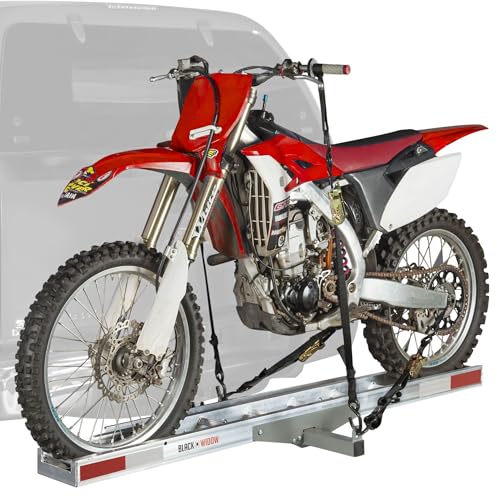
Best for dirt bikes and fat-tire bikes, this aluminum carrier supports wheels up to 5.5 inches wide and includes an extra-long 6-foot ramp for gentle loading. Bilateral loading lets you roll straight through from either side, delivering loading flexibility and reduced maneuvering. A limitation is the potential reduction in capacity per track; verify how many bikes you intend to carry simultaneously and distribute weight accordingly.
Black Widow Aluminum Double Motorcycle Carrier

Best for transporting two motorcycles without a trailer, this double-carrier uses 2-inch hitch compatibility and offers two tracks to support up to 600 pounds in total (400 pounds per track). The lightweight aluminum design aids handling, and a roll-on/off ramp provides convenient loading on either side. A potential caveat is increased overall length and width, which may require more trailer or driveway space. Consider vehicle width and hitch alignment when loading two bikes.
Buying Guide
What should you consider when choosing a hitch mount motorcycle carrier?
- Weight capacity: Ensure the carrier can support the heaviest bike you transport, including possible gear on the bike. Consider future needs if you plan to upgrade bikes.
- Material and durability: Aluminum is lighter and resistant to corrosion but may offer less rigidity than steel in extreme scenarios. Steel carriers excel in durability and higher load stability.
- Ramp design and length: Longer ramps reduce the incline and ease loading, especially for beginners or heavy bikes. Check whether ramps are self-storing and which side loading is supported.
- Mounting and stability: Look for stabilizing features, side or bilateral loading options, and locking mechanisms to minimize sway during transit.
- Vehicle compatibility: Confirm your vehicle’s hitch class and receiver size (usually Class III or IV; 2-inch receivers are common). Verify clearance and wheelbase constraints for your bike(s).
- Maintenance and weather resistance: Coatings and materials should resist rust and wear, particularly if you ride in rain or snow. Aluminum options generally fare well in varied weather.
- Storage and handling: Some carriers include built-in hooks or stow-away features for easier storage when not in use. Weigh the carrier itself if you’ll handle it frequently.
Frequently Asked Questions
- What is a hitch mount motorcycle carrier best for? It’s best for riders who need to move a bike without towing a trailer and want quick setup with a hitch-based system.
- Can I carry more than one bike on a hitch carrier? Yes, some models support two bikes or more per carrier, but always check the per-track or total weight limits and width constraints.
- Are aluminum carriers safer than steel? Aluminum carriers are lighter and corrosion-resistant, while steel carriers may offer slightly higher rigidity. Choose based on your use case and climate.
- Do all hitch carriers require a ramp? Most do, or provide a ramp option to ease loading. Verify ramp length and whether it folds or stores on the carrier.
- What maintenance is required for a hitch carrier? Regularly inspect bolts, ramps, and locking mechanisms, and clean off debris and moisture to prevent rust or metal wear.
- Is a dual-bike carrier harder to install than a single-bike version? Dual-bike carriers tend to be longer and heavier, requiring careful alignment and hitch capacity checks.