A 1-1/4-to-2-inch hitch adapter lets a compatible smaller receiver accept accessories with a 2-inch shank. The MaxxHaul 70032 is best for straightforward accessory conversion on a Class II receiver; the MaxxHaul 80875 suits buyers who also need rise, drop, and extra reach. METOWARE adds 6-1/2 inches of clearance, while labwork is an option to investigate when rise or drop is needed. BougeRV converts in the opposite direction, from a 2-inch receiver to a 1-1/4-inch opening.
| Product | Best suited for | Key detail |
|---|---|---|
| MaxxHaul 70032 | Class II receiver owners | 350-pound maximum tongue weight |
| METOWARE adapter | Extra clearance | 6-1/2-inch extension |
| MaxxHaul 80875 | Rise, drop, and reach | 9-inch extension |
| BougeRV sleeve | Reverse-size conversion | 2-inch receiver to 1-1/4-inch |
| labwork rise-drop | Buyers comparing height options | Confirm dimensions and capacity |
MaxxHaul 70032 Class II Adapter

This adapter converts a Class II 1-1/4-inch receiver to accept standard 2-inch hitch-mounted accessories. The listed examples include bike racks and cargo carriers. It has a maximum tongue weight rating of 350 pounds, but the adapter’s extension can reduce the vehicle hitch’s rated tongue-weight capacity.
Best for: Drivers with a Class II receiver who want to use a 2-inch accessory without a rise-or-drop feature. It is selected for its clearly stated conversion direction and receiver-class requirement.
Check before buying: The listing says it is not compatible with Class I receivers that do not meet Class II specifications. Use the lower rating of the vehicle hitch or adapter, and confirm the accessory’s requirements.
METOWARE Adapter With 6-1/2-Inch Extension

METOWARE describes this steel adapter as a 1-1/4-to-2-inch converter that adds 6-1/2 inches of length. The added reach may help create space between a rear-mounted accessory and the vehicle bumper. The listing gives a 3,500-pound gross-load figure and a 350-pound tongue-weight figure; verify what each rating applies to before use.
Best for: Buyers who need more clearance behind the vehicle as well as a 2-inch accessory opening. The extension is its distinguishing feature compared with a basic adapter.
Check before buying: Extra length can affect usable hitch capacity. Do not assume that a listed load figure makes the adapter suitable for towing; confirm the manufacturer’s intended use, vehicle rating, and accessory instructions.
MaxxHaul 80875 Rise-Drop Adapter

The MaxxHaul 80875 converts a 1-1/4-inch Class I or Class II receiver to accept 2-inch accessories. Its listed configuration provides a 4-inch rise or a 3-3/8-inch drop, plus a 9-inch extension. The product features identify bike racks and cargo carriers as intended accessory examples.
Best for: Buyers who need to adjust accessory height or gain additional reach. It is more versatile than a straight adapter when ground clearance or bumper and spare-tire clearance is a concern.
Check before buying: The listing states a 350-pound tongue weight, but an adapter may reduce the vehicle hitch’s capacity. Confirm receiver class, orientation, pin fit, and combined load limits before installing an accessory.
BougeRV 2-Inch-To-1-1/4-Inch Sleeve
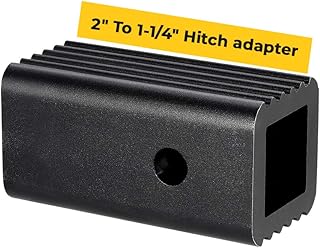
This BougeRV insert converts a Class III or Class IV 2-inch receiver opening to a 1-1/4-inch opening. It does not convert a 1-1/4-inch receiver to accept a 2-inch accessory, so it is a reverse-direction option included for shoppers comparing hitch sizes.
Best for: Drivers with a 2-inch receiver who need to fit a 1-1/4-inch accessory, subject to the accessory and vehicle requirements.
Check before buying: The listing specifies a 0.52-inch pinhole and a 1/2-inch hitch pin. It says the sleeve will not fit a 5/8-inch pin, so check pin diameter before ordering.
labwork Hitch Rise-Drop Adapter

The labwork listing describes a steel rise-drop hitch connector with a 1-1/4-to-2-inch size range. It says the unit mounts at the vehicle’s screw position without drilling and can be installed alone. The supplied feature information does not specify exact rise or drop measurements or a load rating.
Best for: Buyers comparing a rise-drop design who can verify the dimensions and capacity before purchase. It is included because its stated size range matches the requested conversion.
Check before buying: Do not rely on the broad size description alone. Confirm conversion direction, receiver-class fit, pin dimensions, and load rating with the seller or product documentation.
Buying Guide: How To Choose A Hitch Adapter
Which conversion direction do you need?
Match the adapter to both openings: your vehicle receiver and the accessory shank. A 1-1/4-to-2-inch adapter accepts a 2-inch accessory in a smaller receiver. A 2-to-1-1/4-inch sleeve does the reverse. These products are not interchangeable.
Does the adapter fit your receiver class?
Check whether the product specifies Class I, Class II, Class III, or Class IV fitment. For example, the MaxxHaul 70032 is listed for Class II receivers only, while the MaxxHaul 80875 states Class I and II compatibility. Measure the receiver opening and consult the vehicle manual rather than relying on appearance alone.
Do you need extra reach or a height change?
A straight adapter is simpler when the accessory already clears the bumper and sits at a suitable height. Choose an extension when additional reach is needed, and consider a rise-drop model when accessory height matters. More length can affect capacity and leverage, so check all applicable ratings.
What load limits should you check?
Compare the vehicle hitch, adapter, and accessory limits, and follow the lowest applicable rating. Account for the total load, including the rack or carrier itself and its cargo. Do not use an adapter for towing unless its documentation explicitly permits that use and the full towing setup is rated accordingly.
Will your hitch pin fit?
Confirm pin diameter and pinhole placement before purchase. The BougeRV listing, for example, specifies a 1/2-inch pin and says a 5/8-inch pin will not fit. Also check that the installed accessory has adequate clearance from the bumper, spare tire, and ground.
Frequently Asked Questions
Can a 1-1/4-to-2-inch adapter fit any 1-1/4-inch hitch?
No. Fitment depends on receiver class and the adapter’s specifications. Check the vehicle manual and adapter listing before use.
Does an adapter increase hitch capacity?
No. An adapter does not increase the vehicle hitch’s rating. Its added length may reduce usable capacity, so follow the lowest applicable limit.
Can I tow a trailer with these adapters?
Do not assume so. Confirm that the specific adapter is approved for towing and that the vehicle, hitch, adapter, and trailer ratings are compatible.
What is the difference between an adapter and a reducer sleeve?
A 1-1/4-to-2-inch adapter makes a smaller receiver accept a larger accessory shank. A 2-to-1-1/4-inch sleeve makes a larger receiver accept a smaller shank.