When you need reliable, high-capacity towing straps, the right choice is essential for safe and effective vehicle recovery. This guide highlights five top options, explains who each product is best for, and provides practical buying tips. Suitable buyers include off-road enthusiasts, truck owners, fleet drivers, and everyday drivers who want a dependable recovery tool in their trunk. Below, compare features, strengths, and a short buying guide to help you pick the strap that fits your needs.
| Product | Type | Break Strength | Ideal For |
|---|---|---|---|
| JCHL Nylon Tow Strap | 2″ x 20′ Nylon/Polyester | 20,000 lbs | Standard vehicle towing, car/truck/ATV |
| METOWARE Tow Strap Kit | 3″ x 20′ Strap with D-rings | 35,000 lbs (strap) / 45,000 lbs (shackles) | Recovery kits, heavier vehicles, off-road |
| Rhino USA Recovery Tow Strap | 3″ x 20′ Polyester | Noted for high strength | Flat recovery, US-based support |
| ELEAD 3″ x 30′ Tow Strap Kit | 3″ x 30′ Strap + D-rings | 36,000 lbs | Truck/SUV recovery, longer reach |
| ALL-TOP Tow Strap Kit | 3″ x 20′ Nylon Strap | 35,000 lbs | General recovery with added elasticity |
JCHL Nylon Tow Strap With Hooks
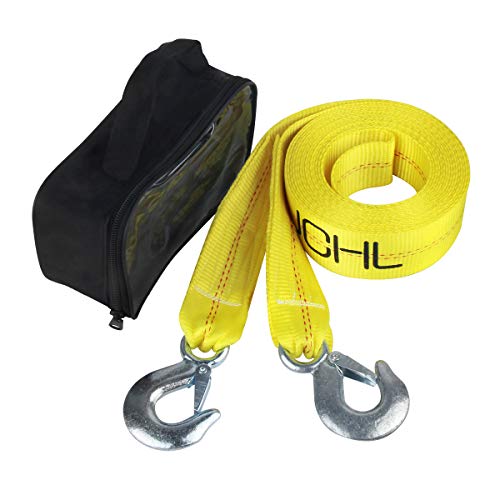
The JCHL 2″ x 20′ tow strap is built for everyday vehicle towing and light vehicle recoveries. It offers a 20,000-pound break strength and is described as high tensile strength nylon, with universal use for cars, trucks, ATVs, and SUVs. This strap is best for owners who want a compact, straightforward recovery option that fits in most trunks. A notable limitation is that the data emphasizes break strength rather than peak dynamic loads, so avoid using it for extreme off-road recoveries with substantial snatch forces. Best for: standard to mid-size towing tasks and general roadside recoveries.
METOWARE Heavy Duty Tow Strap Recovery Kit

The METOWARE kit includes a 3″ x 20′ orange tow strap, two 3/4″ D-ring shackles, and a storage bag. With a lab-tested 35,000 lbs break strength for the strap and 45,000 lbs capacity for the shackles, this setup is well-suited for heavier trucks and off-road recoveries. Best for: users who want a complete recovery kit with shackles and secure storage. Caution: ensure proper anchor points and proper use of D-rings to avoid slippage or hook abrasion.
Rhino USA Recovery Tow Strap (3in x 20ft)

The Rhino USA strap is American-owned with a focus on weather resistance and durability for flat recovery scenarios. It’s designed for towing or pulling vehicles stuck on flat surfaces and emphasizes reliable protection during recovery tasks. Best for: buyers prioritizing local support and a sturdy, weather-resistant strap. Limitation: the listing highlights general durability without specific break strength figures in the visible description.
ELEAD 3″ x 30Ft Recovery Tow Strap Kit

ELEAD offers a complete 3″ x 30′ recovery strap with two 3/4″ D-ring shackles. It claims a 36,000 lbs break strength and reinforced shackles with an electro-galvanized finish. This kit suits longer-reach recoveries and heavier vehicles such as full-size trucks or SUVs. Best for: those who need longer straps for larger vehicles. Caution: ensure the strap length fits the recovery scenario to avoid overextension or tangling.
ALL-TOP Heavy Duty Tow Strap Recovery Kit

ALL-TOP’s kit uses 3″ x 20′ 100% nylon with 22% elongation, offering a 35,000 lbs breaking strength and 12,000 lbs work load. It includes two 3/4″ heavy-duty D-ring shackles and a storage bag. This option balances high strength with elasticity, helping to reduce shock loads during recovery. Best for: drivers who want a bit of stretch to reduce jerk forces. Caution: nylon straps can creep under sustained loads; avoid using with sharp edges without protective sleeves.
Buying Guide
What should you consider when choosing a heavy duty tow strap?
- Break Strength vs. Work Load Limit: Break strength is the maximum, but always select a strap with a higher working load limit than your vehicle’s weight and anticipated load.
- Strap Material and Elasticity: Nylon provides more stretch, polyester offers better abrasion resistance and water resistance. Consider climate and usage frequency.
- Size and Length: 2″ to 3″ widths are common for cars and light trucks. Longer straps reach distant anchor points but are heavier and less compact.
- Hardware: D-rings and hooks should be corrosion-protected; ensure compatibility with anchor points and avoid hooks that can slip or detach during recovery.
- Kit Inclusions: Some sets include shackles, bags, or extra accessories. A complete kit can save you time in emergencies.
- Intended Use: For off-road or heavy-duty towing, select straps with higher break strengths and robust shackles. For everyday use, standard straps may suffice.
Usage Tips
- Inspect straps for wear, fraying, or cuts before each use.
- Use proper anchor points and avoid sharp edges to minimize abrasion.
- Follow manufacturer guidelines for recovery procedures and avoid excessive shock loads.
- Store in a dry, cool place to preserve material integrity.
FAQ
- Q: What’s the best strap for a flat recovery? A: A strap with good abrasion resistance and sturdy D-rings, like those in kit combinations, is ideal for flat recovery tasks.
- Q: Is nylon or polyester better for recovery? A: Nylon provides more stretch, which can cushion loads; polyester offers better abrasion and weather resistance.
- Q: Do I need shackles with a tow strap? A: Shackles add secure connection points and are recommended on many setups, especially with off-road or heavier vehicles.
- Q: How do I know the strap fits my vehicle? A: Check break strength relative to your vehicle’s weight and consider strap width and length for your recovery points.
- Q: Should I carry more than one strap? A: Yes, having a secondary strap can be beneficial for diverse recovery scenarios or to assist others.
- Q: Are these straps safe for tree-saving use? A: Some straps are marketed as tree saver or winch extension straps; confirm material and integrity before use to avoid damage to trees or equipment.