Fueling on the go calls for dependable gear that can move with you without spills or delays. This guide spotlights five leading gas caddies with pumps, covering electric transfers, manual siphoning, and auto-stop technology. Ranging from compact 14‑gallon models to rugged 40‑gallon tanks, these caddies are built to roll across lawns, docks, farms, and garages while delivering steady, controlled fuel flow. Each option suits different spaces, power availability, and fueling routines, helping you pick a dependable solution for your everyday needs.
Use the quick-reference table below to compare capacity, pump type, and standout features at a glance before diving into detailed product sections.
| Product | Brand | Capacity (Gal) | Pump Type | Notable Features |
|---|---|---|---|---|
| Scepter Flo N Go 14 Gal Gas Caddy | Scepter | 14 | Electric | 4.7 GPM on batteries; up to 6.0 GPM with AC power; 10-ft hose; gravity/siphon modes |
| TERA PUMP TRFA03-GC | TERA PUMP | N/A | Automatic/Elec (3 power options) | Auto-Stop; 2.6 GPM; 9.8 ft hose; compatible with Scepter caddies |
| TERA PUMP Next Gen | TERA PUMP | N/A | Automatic/Elec (3 power options) | 2.6 GPM; auto-stop nozzle; 9.8 ft hose; built-in fuel caddy adapter |
| EltraWors 40 Gallon Gas Caddy With Pump | EltraWors | 40 | Manual | Industrial steel build; triple-layer leak-proof design; no electricity needed; anti-static and grounding |
| TUFFIOM 30 Gallon Gas Caddy | TUFFIOM | 30 | Manual | 11.9 ft hose; reversible rotary pump; anti-static grounding clamp; large fill neck |
Scepter Flo N Go 14 Gal Gas Caddy

The Scepter Flo N Go 14 Gal Gas Caddy combines mobility with a built‑in electric fuel transfer pump, designed for farm work, marine tasks, and home maintenance. With a 14‑gallon capacity, it supports fast fueling when powered by 8 AA batteries (sold separately) delivering about 4.7 GPM, or up to 6.0 GPM when using the optional AC power cable. A 10‑foot hose provides reach to most equipment, and the pump handle features a gas-station style stop and start for precise control. The system supports both gravity and siphon transfer modes, adding flexibility for elevated fills or ground-level pourings.
Robust and portable, this caddy uses high‑density polyethylene to resist dents and corrosion while withstanding outdoor conditions. It is specifically designed for gasoline transfer and includes a versatile hose that facilitates refueling of lawn equipment, boats, and vehicles. The combination of sizable capacity, quick transfer rates, and multiple transfer modes makes it a practical choice for frequent, on-site fueling needs.
TERA PUMP Auto-Stop Gas Caddy

The TRFA03-GC model from TERA PUMP provides an automatic stop feature and is designed to work with Scepter gas caddies via a built‑in Fuel Caddy Adapter. It delivers up to 2.6 GPM through a durable 9.8 ft vinyl hose, making it suitable for refueling boats from a dock or transferring fuel to remote equipment. The Auto-Stop Sensor automatically halts flow once the container is full, and a Gas Tank Clip enables hands-free refueling, reducing spills and overfills.
Power is flexible with four options: a 12V plug‑in adapter (13.3 ft cord), a 12V cigarette lighter (9.7 ft), 12V alligator cable clips (13.2 ft), and a PD USB‑C to DC 12V option. This versatility allows operation from standard outlets, vehicle batteries, or portable power sources, adapting to different work sites and setups.
TERA PUMP Next Gen Gas Caddy Pump

The Next Gen version from TERA PUMP continues the auto‑stop, 2.6 GPM performance, and compatibility with Scepter gas caddies. It includes a built‑in Fuel Caddy Adapter to ensure smooth connection with compatible tanks and a 9.8 ft vinyl hose for flexible dispensing. The nozzle, with automatic stop, helps minimize spills while transferring fuel. A 31.5‑inch intake hose accommodates access from higher fill sources, reducing the need to reposition heavy tanks during refueling.
Operation remains flexible with three power options (12V plug-in, cigarette lighter, and alligator clips) plus a USB‑C to DC 12V configuration in certain builds. The device relies on a DC impeller motor to sustain a reliable flow, delivering consistent performance across typical fueling tasks while prioritizing safety and ease of use.
EltraWors 40 Gallon Gas Caddy With Pump

The EltraWors 40 Gallon Gas Caddy emphasizes rugged durability for demanding sites. Constructed from thickened alloy steel and coated with a military-grade anti‑rust finish, it provides high resistance to impact and corrosion, making it suitable for construction sites, fleets, or remote worksites. This model uses a dual‑mode manual pump rather than an electric system, delivering fuel without external power and enabling operation in areas without access to electricity. A triple‑layer leak‑proof design, auto-sealing valve, spill‑resistant filler neck, and dual‑lock seals bolster safety during transfer.
Safety features include an anti‑static grounding strap and explosion‑proof hoses, reducing fire hazards during pumping. A transparent fuel gauge helps monitor levels, and the wide filling neck minimizes spills during refueling. This 40‑gallon option suits larger fueling needs where power access is limited and durability is essential for long-term use.
TUFFIOM 30 Gallon Gas Caddy
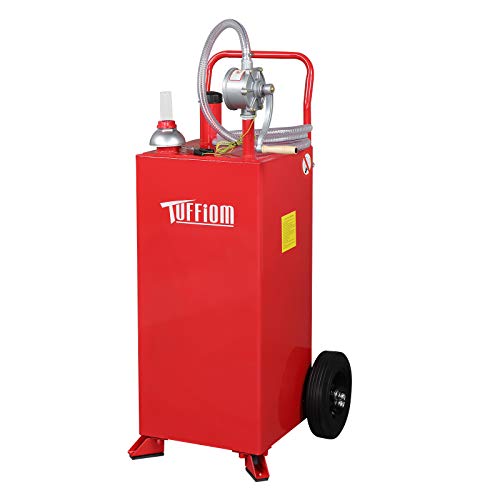
The TUFFIOM 30 Gallon Gas Caddy offers a balance of capacity and portability with wheels for easy transport. It features an 11.9‑foot hose, enabling fuel delivery across longer distances, and a reversible rotary pump that can both dispense and siphon fuel. The ergonomic hand crank reduces effort during operation, while an anti‑static grounding clamp minimizes the risk of static discharge. The unit also includes an easy‑to‑read vent/oil level gauge for quick fuel monitoring and safe usage on job sites, farms, or watercraft applications.
Designed for versatility, this caddy supports fueling tractors, ATVs, boats, and larger equipment. The combination of a long hose, manual pumping, and wheeled portability makes it a practical option when electricity is not readily available or when a simple, reliable transfer is preferred.
Buying Guide
When choosing a gas caddy with a pump, consider capacity needs, fuel transfer speed, and power availability. Electric pumps deliver faster transfers and are ideal when you have reliable power sources, while manual pumps eliminate the need for electricity, offering dependable operation in remote locations. Auto-stop features reduce spill risk by automatically halting flow when the receiver is full, a critical safety enhancement for larger tanks.
- Capacity: Smaller models (around 14–15 gallons) are lighter and easier to maneuver but require more frequent refills. Larger units (30–40 gallons) reduce trips but add weight and bulk. Match capacity to typical fueling tasks.
- Pump Type and Flow: Electric pumps with high GPM speeds speed up fueling; manual pumps are economical and robust. Auto-stop nozzles add safety by preventing overfills.
- Power Source: Ensure the pump’s power options align with your setup—AC, 12V vehicle power, or portable power sources. Some models offer multiple options for flexibility.
- Hose Length and Durability: Longer hoses (9–12 ft) extend reach but can add weight. Look for reinforced vinyl or metal hoses that resist kinks and chemical wear.
- Safety Features: Anti-static grounding, grounding straps, spill-proof caps, and explosion-proof hoses improve safety in environments with flammable liquids.
- Compatibility: Some pumps are designed to work with specific caddies (notably Scepter). Verify compatibility to ensure a secure fit and proper operation.
- Portability and Build Quality: Wheels, handles, and durable materials (HDPE, reinforced steel) affect ease of transport and longevity in rugged settings.
- Maintenance and Warranty: Check for replacement parts, ease of servicing, and warranty options to protect your investment over time.
Quick Comparisons
- Electric pumps offer faster transfers but require power; best for frequent fueling at a fixed site.
- Manual pumps work without electricity and are highly durable, suitable for remote locations or off-grid use.
- Auto-stop systems reduce spills and are especially valuable with larger tanks.
- Hose length matters for reach; ensure the hose is long enough to access vehicles and equipment without repositioning the caddy constantly.
- Capacity should align with your typical fueling interval to minimize refills and downtime.