Freon leaks can compromise cooling performance and lead to higher energy use and costly repairs. Stop-leak products promise a quick, preventive approach for minor breaches, whether you’re maintaining a car, truck, or home HVAC system. This guide highlights five leading Freon stop-leak options, explaining how they work and where they fit best. Each product below is chosen for automotive and light-commercial applications, with attention to ease of use, compatibility, and the potential need for a professional follow-up if leaks are substantial.
Reviewers should consider refrigerant compatibility, system size, and whether a product emphasizes ongoing maintenance or a one-time repair. The table below summarizes essential details to help you compare at a glance. Always follow manufacturer instructions and observe safety precautions when working with AC systems.
| Product | Brand | Key Benefit |
|---|---|---|
| Aerosol A/C Leak Stop Seals, 4 Oz | Supercool | Easy aerosol sealant for automotive leaks; good for quick touch-ups on cars and trucks. |
| Leak Saver Direct Inject AC Stop Leaker Sealer | Leak Saver | Permanently seals small leaks; works with all systems up to 5 tons; broad refrigerant compatibility. |
| A/C Pro Car A/C Stop Kit | A/C Pro | Car-specific sealant with refrigerant and additives; targets metal and rubber leaks in R134A systems. |
| Leak Saver Direct Inject Ultimate 3-in-1 | Leak Saver | 3‑in‑1 sealant plus moisture remover and UV dye; comprehensive system treatment for up to 5 tons. |
| BlueDevil Red Angel Stop Leak – 2 Ounce | BlueDevil Products | Forms a chemical weld to seal leaks; no solid particulates; compatible with R12 and R134a. |
Leak Saver Direct Inject AC Stop Leak

The Leak Saver Direct Inject AC Stop Leaker Sealer is designed for broad HVAC compatibility and ease of use. It claims permanent sealing of small refrigerant leaks where the charge is not fully lost within seven days. The formula is pitched as compatible with most systems and refrigerants, including common auto and HVAC refrigerants, making it suitable for central air conditioners, automotive systems, and various heat pump configurations. Installation typically involves injecting the product directly into the system using standard gauges or injection kits, avoiding messy syringes or hoses. The approach emphasizes straightforward application and proactive maintenance to prevent recurring leaks.
Key benefits include uncomplicated installation, a focus on sealed leaks with minimal refrigerant loss, and applicability across multiple platforms—from cars to larger HVAC setups. Potential limits noted by users refer to small leaks rather than large breaches and the need for proper system evacuation or charging practices if the leak is extensive. Always verify compatibility with your particular refrigerant (e.g., R410A, R134A) and follow safety guidelines when opening the AC system.
Leak Saver Direct Inject Ultimate 3-in-1
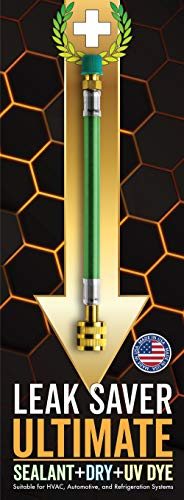
The Ultimate 3-in-1 from Leak Saver combines sealant, moisture removal, and UV dye in a single package, offering a comprehensive system treatment. It aims to permanently seal refrigerant leaks where the charge isn’t fully lost within a week, while simultaneously removing moisture and providing a dye for leak detection under UV light. This product is designed to be compatible with a broad range of systems and refrigerants, including R410A, R22, and other common blends. The three elements work together to address leaks and facilitate future maintenance by highlighting problems with UV dye.
Usage notes emphasize straightforward injection into the system, with compatibility across residential and automotive applications up to five tons. As with any stop-leak product, very large leaks or structural component failures typically require professional service. Prospective buyers should confirm their system’s refrigerant type and consult the installer’s manual or a licensed technician if uncertain about compatibility or application steps.
A/C Pro Car A/C Stop Kit for R134A

A/C Pro’s Car A/C Stop Kit is targeted to automotive A/C systems and uses a combination of refrigerant and additives to address leaks in metal components and rubber seals. The product specifically mentions R134A compatibility and includes approximately 1.5 ounces of refrigerant along with 1.5 ounces of additives. It notes repair capabilities for leaks in evaporators, condensers, compressors, accumulators, receiver dryers, and seals in hoses, O-rings, and gaskets. This kit is designed for in-car use and provides a compact, all-in-one approach for motorists dealing with refrigerant leaks in a typical R134A system.
Users should be aware that this kit addresses smaller leaks and gasket-style issues rather than large, structural breaches. Proper handling of R134A and adherence to local regulations are essential. For persistent or high-volume leaks, professional service is recommended to prevent further system damage and ensure safe refrigerant management.
BlueDevil Red Angel Stop Leak

BlueDevil Red Angel is a well-known stop-leak formula designed to repair leaks in condensers, evaporators, hoses, and O-rings. The product emphasizes that it contains no solid or particulate matter that could clog the A/C system or harm recovery equipment, which can be a concern with some older-stop leak products. It claims the ability to form a chemical weld that seals leaks in both R-12 and R-134a systems, making it versatile for older and newer vehicles alike. The focus is on a stable, particulate-free sealant that remains in the liquid phase and interacts with leak points without contaminating the refrigerant flow.
As with any stop-leak, the range of leak sizes that can be addressed varies. It’s best suited for minor-to-moderate leaks and should be used in accordance with the vehicle’s service manual and refrigerant type. For critical failures or multiple large leaks, professional diagnosis and repair remain essential to preserve system integrity and safety.
Buying Guide
Key considerations help narrow the right freon stop-leak choice for your system:
- System type and refrigerant compatibility: Ensure the product supports your system (automotive vs. residential) and refrigerant type (R134A, R410A, R22, etc.).
- Leak size and location: Stop-leak products are typically best for small leaks or preventative maintenance, not major breaches in condensers, compressors, or major hoses.
- Application method: Direct-injection sealants and aerosols offer different application experiences. Some kits require a manifold gauge setup; others are simple pour-in or spray formats.
- Moisture and dye features: Products that remove moisture and include UV dye enable easier leak detection during service, though dyes require UV lamps and safe handling.
- Safety and materials compatibility: Look for formulas that avoid solids that can clog components. Verify compatibility with your recovery equipment and OEM recommendations.
- Maintenance vs. permanent repair: Some products provide a preventative barrier, while others claim permanent sealing for specific leak types; consider long-term needs and the potential for future leaks.
- Professional validation: For critical leaks or aftermarket work, professional inspection ensures proper refrigerant charge, lubrication, and system integrity after any sealant use.
- Warranty and support: Check whether the manufacturer offers guidance, installation videos, or support if issues arise after application.
| Aspect | Practical Insight |
|---|---|
| Best use scenario | Minor automotive leaks, preventative maintenance, and some small-scale HVAC leaks. |
| Best for | Systems up to about five tons; broad refrigerant compatibility is a strong plus. |
| Tools required | Manifold gauge set or basic inject kit for some products; others are spray-in or pour-in. |
| Safety notes | Follow product instructions, avoid introducing moisture, and handle refrigerants per local regulations. |