Searching for dependable camper trailer tires with rims? This guide highlights five solid options that balance load capacity, bolt pattern compatibility, and ready-to-install convenience. The best picks suit campers, utility trailers, and boat trailers that need quick wheel upgrades or replacements. Buyer-focused notes show who each product is best for and why it stands out.
| Product | Rim Size | Bolt Pattern | Load Rating | Best For |
|---|---|---|---|---|
| Garvee 2-Pack ST205/75D14 Trailer Tires with 14″ Rims | 14″ | 5 on 4.5″ | 1760 lbs @ 50 PSI | Light to medium-duty trailers; value-focused upgrades |
| Garvee 2-Pack ST205/75D15 Trailer Tires and 15″ Rims | 15″ | 5 on 4.5″ | 1820 lbs @ 50 PSI | Heavier loads; utility, boat, and camper trailers |
| GarveeTech ST205/75D15 Trailer Tire and Wheel Assembly | 15″ | 5 on 4.5″ | 1820 lbs @ 50 PSI | Ready-to-install package; quick replacement |
| eCustomrim 2-Pack Trailer Tire Rim Assembly ST205/75R14 | 14″ | 5 on 4.5″ | 2040 lbs @ 65 PSI | Radial tire stability; versatile trailer use |
| eCustomrim 2 Pack Trailer Tire Assembly ST205/75D15 Load C | 15″ | 5 on 4.5″ | 1820 lbs @ 50 PSI | Bias ply stability with easy installation |
Garvee 2-Pack ST205/75D14 Trailer Tires with 14″ Rims

These tires use a bias-ply design with Load Range C and 6-ply construction, delivering up to 1760 lbs at 50 PSI. The included 14″ steel rims (5 lug, 4.5″ bolt pattern) simplify mounting on compatible trailers. Best for budget-conscious campers and utility trailers that require a straightforward swap. Cautions: bias-ply construction can feel stiffer on rocky terrain compared with radial tires; verify compatibility with your trailer’s hub and fender clearance.
GarveeTech ST205/75D15 Trailer Tire And Wheel Assembly
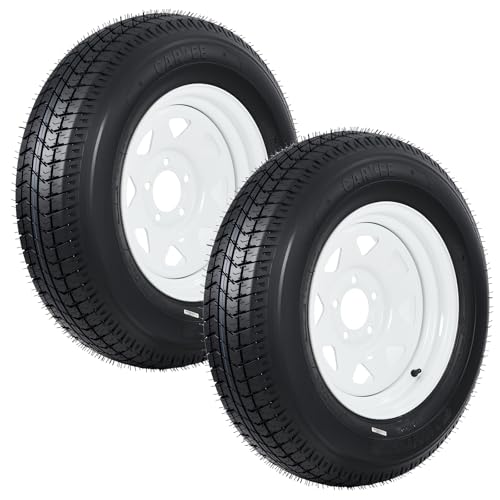
This 2-pack includes bias-ply ST205/75D15 tires mounted on 15″ white spoke wheels with a 5 lug, 4.5″ PCD. Ready to install, it supports trailers that demand strong towing stability for utility and boat use. Best for quick replacements and uniform appearance. Limitation: biased ply construction may not offer the same ride characteristics as radial tires in extreme off-road conditions.
Garvee 2-Pack ST205/75D15 Trailer Tires and 15″ Rims
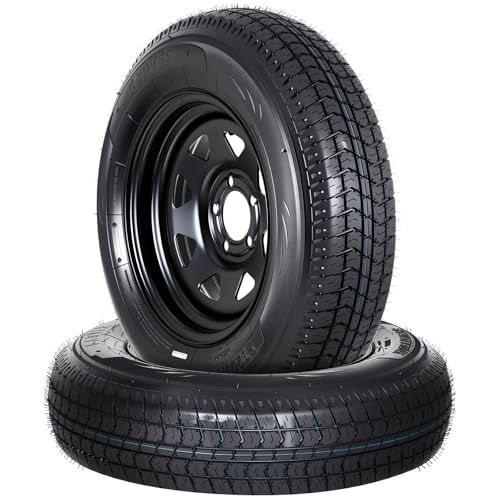
This set combines 15″ rims with ST205/75D15 tires, rated for up to 1820 lbs at 50 PSI. It’s designed for heavier camper and utility trailers that require dependable load handling and straightforward installation. Best for those who want a ready-to-run wheel and tire package. Caution: ensure your trailer’s hub bore matches the rim’s center bore specification to avoid install issues.
eCustomrim 2 Pack Trailer Tire Assembly ST205/75D15 Load C 5 Lug White

This set features bias ply tires with Load Range C and 50 PSI, mounted on 15″ rims with a 5 lug 4.5″ pattern. It provides a stable, predictable ride for campers and utility trailers, with a two-year warranty. Best for buyers seeking a white-wheel aesthetic and a straightforward installation. Limitation: bias ply design may not perform as smoothly as radial tires on rough surfaces for long hauls.
Buying Guide: Key Considerations For Camper Tire And Rim Purchases
- Load capacity and tire type: Radial tires typically handle heat and road irregularities better for longer trips, while bias ply tires offer robust sidewalls and straightforward mounting for lighter duties. Match the tire rating to your trailer’s gross vehicle weight.
- Bolt pattern and rim size: Ensure the wheel’s bolt pattern and center bore match your trailer hub. Common patterns on campers are 5-on-4.5 inches, but verify your specific frame to avoid fitment issues.
- Rim material and finish: Steel rims provide durability at a lower cost, while aluminum rims reduce weight and may improve fuel efficiency and braking response. Consider your climate and exposure to corrosion when selecting a finish.
- Inflation and pressure rating: Check the tire’s maximum PSI and the trailer’s recommended tire pressure. Overinflation can reduce tire contact with the road, while underinflation reduces performance and increases wear.
- Ready-to-install convenience: Pre-mounted tire-and-rim assemblies save time and ensure proper balancing for smoother towing. Confirm the included valve stems meet your setup needs.
- Warranty and support: A longer warranty and roadside assistance can reduce worry on long trips or remote campsites. Review what the warranty covers and for how long.
Frequently Asked Questions
- What should I consider when choosing tubeless vs. bias ply tires for camping trailers?
Radial tires are generally preferred for longer trips and improved fuel efficiency, while bias ply tires can be simpler and more rugged for short-haul or off-road use. Check load rating and service requirements for your trailer.
- Can I mix tire brands on a trailer with rims?
It’s best to match tires by size, load rating, and construction type on a trailer to maintain balanced handling and braking. Mixing can lead to unpredictable performance.
- Is a pre-mounted tire and rim assembly worth it?
Yes for convenience and faster installations. It ensures compatibility of the tire with the rim and often includes balanced assembly as part of the package.
- How do I know the correct bolt pattern for my trailer wheels?
Count the bolt holes and measure the distance between adjacent bolts (the bolt circle diameter). Most trailers use 5 lug patterns such as 5 on 4.5 inches; confirm with your hub specifications.
- What maintenance should I perform on camper tires and rims?
Regularly inspect for cracks, bulges, or uneven wear. Check tire pressure before trips and after storage. Clean rims to prevent corrosion, and replace tires that show signs of aging or damage.
- Which tire and rim combination is best for heavy camper loads?
Look for higher load ranges (Load Range C or D), suitable PSI ratings, and rims that match your hub bore and bolt pattern. Heavier trailers benefit from stronger tire construction and properly rated rims.