The best brake line bleeder kit depends on how you plan to work: a handheld vacuum pump suits DIYers who want a gauge and diagnostic functions, while a pneumatic kit is designed for compressor-equipped users flushing multiple wheels. A check-valve bottle or hose set is a simpler option for basic fluid collection. The five choices below compare operating method, included equipment, and practical limitations.
| Kit | Best For | Key Difference |
|---|---|---|
| Handheld Vacuum Pump Kit | DIYers and diagnostics | Gauge and vacuum testing |
| OMT Vacuum Pump Kit | One-person bleeding | Aluminum pump and silicone tubes |
| PARAROSE Pneumatic Kit | Compressor owners | 17 adapters and two tanks |
| PESIKO Bleeder Bottle | Simple fluid collection | One-way valve and 24-inch hose |
| OFBAND Hose Kit | Basic hose-based bleeding | Two check valves and hose pairs |
ZEAJSRU Handheld Vacuum Pump Kit

Best for: Home mechanics who want a manual vacuum bleeder that can also support basic vacuum-system diagnostics. The kit includes a handheld pump, hoses, adapters, a reservoir, and a dual-scale gauge reading in inHg and PSI.
It is selected for its combination of brake and clutch bleeding with checks of components such as vacuum lines, EGR valves, and PCV systems. The gauge gives the operator a visible reading while applying vacuum, and the kit is described for use with cars, motorcycles, ATVs, and small trucks.
Limitation: This is a hand-operated tool, so the user supplies the pumping effort. Check the adapter fit and instructions for the specific vehicle before starting.
Orion Motor Tech One-Man Vacuum Kit

Best for: Users seeking a handheld pump with a dial gauge and adapter set for bleeding brake or clutch hydraulic systems. Its pump is made from anodized aluminum alloy, and the listed kit includes silicone tubes, a barbed nozzle, and clamps.
Choose this kit if material and hose-sealing details matter in your comparison. The manufacturer describes the silicone tubing as heat-resistant and resilient, while the clamps help hold the tubing securely during use. The pump can also be used for other vehicular hydraulic systems, according to the product information.
Limitation: Although the adapter set is described as broadly compatible, the correct adapter and a tight connection are still necessary. Confirm the fit at the bleeder screw before drawing fluid.
PARAROSE 3L Pneumatic Bleeder Kit

Best for: DIYers or technicians who already have a compatible air compressor and want to handle a multi-wheel flush. The product specifies compressor operation at 70–170 PSI and a maximum flow requirement of 5 CFM.
The kit includes 17 adapters, a 2-liter waste-fluid tank, and a 1-liter refill bottle. That combination is useful for users who want several adapter choices and separate containers for extracted fluid and fresh-fluid top-ups. It is designed for one-person brake and clutch bleeding.
Limitation: This pneumatic model depends on an air compressor that meets the stated operating requirements. Avoid choosing it if you do not have a suitable compressor or prefer a manual pump.
PESIKO One-Way Brake Bleeder Bottle

Best for: Buyers who need a straightforward bottle and hose to collect old brake fluid. Its listed features include a 1-liter bottle, a 60-centimeter (24-inch) hose, a one-way check valve, and a chain with hooks for holding the bottle in place.
The check valve is intended to limit fluid backflow and air entry while fluid drains. This makes the bottle a compact alternative to a pump-based kit when the user wants a basic collection setup. The product also lists a rigid plastic bottle, corrosion-resistant valve, and high-temperature-resistant hose.
Limitation: The listing describes a bottle and hose rather than a vacuum pump or a large adapter assortment. Choose another option if you need gauge-based vacuum control or multiple fittings.
OFBAND Two-Set Brake Bleeder Hose Kit
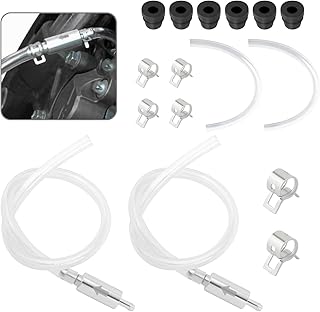
Best for: Buyers who want a basic hose-and-valve arrangement for hydraulic brakes on many cars, motorcycles, or bikes. The set includes four hoses in two lengths, two one-way check valves, clamps, and six rubber bleeder-screw caps.
Choose this kit if you value having spare hose sections and valves in one package. The check valves are intended to help prevent air and debris from entering the system, while the clamps help secure the hoses and reduce spills. The dust caps help keep grease and dirt away from bleeder screws between uses.
Limitation: The listed contents do not include a vacuum pump, pressure gauge, or collection bottle. It is a simpler accessory set, not a complete powered bleeding system.
Buying Guide: How To Choose A Brake Line Bleeder Kit
Do you want a manual, pneumatic, or basic hose setup?
A handheld vacuum pump gives the user direct control and commonly includes a gauge and hoses. A pneumatic bleeder can make one-person extraction more convenient, but requires an air compressor that meets its stated specifications. A bottle or hose-and-valve kit is simpler, but has fewer built-in controls and accessories.
How important are adapters and vehicle coverage?
Compare the included adapter set with the bleeder screws on your vehicle. A larger assortment may provide more fitting options, but product descriptions such as “universal” do not guarantee a fit for every vehicle. Check the service information for your vehicle and verify that each connection seals before bleeding.
Will you also use the kit for diagnostics?
If you want to test vacuum-operated components as well as bleed brakes, consider a handheld pump with a gauge. A dedicated bottle or hose kit is intended for fluid handling and does not list vacuum-diagnostic functions.
What should you prepare before bleeding brakes?
Use the brake-fluid type specified by the vehicle manufacturer, keep the master-cylinder reservoir from running low, and follow the vehicle’s bleeding sequence. Brake fluid can damage painted surfaces, so protect nearby finishes and collect used fluid for proper disposal. Stop if a fitting leaks or the brake pedal does not feel normal after service.
Frequently Asked Questions
Can one person bleed brakes with a vacuum kit?
Yes. The handheld vacuum kits listed here are described for one-person bleeding. Follow the tool and vehicle instructions, and keep the reservoir supplied with fresh fluid during the process.
Is a pneumatic brake bleeder better than a hand pump?
Neither is best for every user. A pneumatic kit can suit repeated or multi-wheel work if you have a compatible compressor. A hand pump avoids the compressor requirement but requires manual operation.
Does a bleeder bottle include a pump?
The PESIKO product information lists a bottle, hose, check valve, and hanging chain, but does not list a pump. It is a collection-style option rather than a vacuum-pump kit.
Can these kits be used on motorcycles?
Several listed products are described for motorcycle use, including the handheld vacuum kit and OFBAND hose set. Confirm the fitting size and bleeding procedure for the specific motorcycle before use.
Why does a brake bleeder kit need a check valve?
A one-way check valve is intended to limit fluid backflow and reduce the chance of air returning through the hose. A secure connection and correct bleeding procedure are still essential.