Fast answer: These 0W-20 full synthetic oils are designed for fuel efficiency, strong wear protection, and clean engine performance. This guide highlights five top options and who they’re best for, with practical comparisons to help you choose.
The top picks are ideal for different buyers: daily drivers seeking long oil-change intervals, high-mileage vehicles needing extra protection, and engines that demand cleaner deposits and reduced friction. Use the table below for a quick snapshot of the selected products.
| Product | Best For | Key Benefit |
|---|---|---|
| Castrol GTX Full Synthetic 0W-20 | Standard daily drivers | Superior wear protection and sludge resistance |
| Mobil 1 Advanced Fuel Economy 0W-20 | Fuel-efficient engines | Low viscosity for improved mpg and clean performance |
| Valvoline Advanced Full Synthetic 0W-20 | Balanced protection and deposits | Strong wear and deposit defense |
| Mobil 1 High Mileage 0W-20 | Vehicles with 75k+ miles | High-mileage protection and cleanliness |
| Castrol EDGE 0W-20 | Performance-minded engines | Extreme high-stress performance and long intervals |
Castrol GTX Full Synthetic 0W-20 Motor Oil, 5 Quarts

Castrol GTX Full Synthetic 0W-20 is designed to protect critical engine parts with advanced wear protection and sludge defense. It is formulated to resist viscosity breakdown and maintain stable performance under stress. Best for daily drivers that demand reliable protection and cleaner engines.
- Best for: Cars needing strong wear protection
- Why chosen: 6X better wear protection on critical parts; 1.3X better sludge protection; 3X stronger against viscosity breakdown
- Limitations: Data emphasizes wear and sludge metrics; real-world mileage intervals may vary by vehicle
Mobil 1 Advanced Fuel Economy 0W-20, 5 Quart

Mobil 1 Advanced Fuel Economy 0W-20 targets fuel efficiency with a low-viscosity formula that supports cleaner combustion and reduced drag. It uses Mobil 1’s Triple Action Formula for engine protection, performance, and cleanliness, with up to 10,000 miles between oil changes claimed in specs.
- Best for: Vehicles prioritizing fuel economy
- Why chosen: Low viscosity helps mpg; maintains viscosity and oxidation control
- Limitations: Extended drain potential may vary; always follow vehicle manufacturer guidance
Valvoline Advanced Full Synthetic SAE 0W-20 Motor Oil 5 QT

Valvoline Advanced Full Synthetic 0W-20 provides enhanced protection against wear, heat, friction, and deposits. It offers stronger wear protection and better deposit defense versus industry standards, helping engines stay cleaner and perform smoothly over time.
- Best for: Vehicles needing robust wear protection and deposit control
- Why chosen: 40% stronger wear protection; 15% better deposit defense
- Limitations: High-mileage needs may benefit from dedicated high-mileage formulas
Mobil 1 High Mileage Full Synthetic 0W-20, 5 Quart

This high-mileage formula is designed for engines with over 75,000 miles, offering protection for up to 10,000 miles between oil changes and help maintaining engine cleanliness. It includes a Triple Action Formula to balance performance and longevity for aging engines.
- Best for: Older engines needing extended protection
- Why chosen: Tailored for high-mileage wear and seals
- Limitations: May not be necessary for newer or low-mileage vehicles
Castrol EDGE 0W-20 Advanced Full Synthetic Motor Oil, 5 Quarts

Castrol EDGE 0W-20 targets high-stress performance with a claim of being 3X stronger than leading full synthetics and offering up to 20,000 miles between oil changes. It’s suited for drivers who push engines in demanding conditions or who want longer service intervals in line with manufacturer specs.
- Best for: Performance-focused drivers
- Why chosen: Higher stress performance and longer interval potential
- Limitations: Longer intervals depend on vehicle and driving conditions
Valvoline Full Synthetic High Mileage 0W-20 with MaxLife Technology
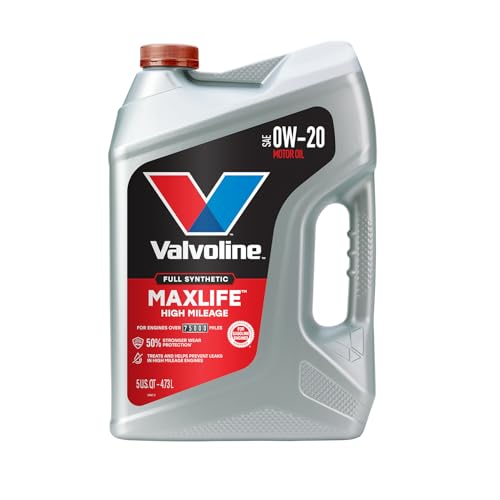
Valvoline Full Synthetic High Mileage with MaxLife Technology is engineered for vehicles over 75,000 miles. It includes seal conditioners to help prevent leaks and reduce oil consumption while delivering strong wear protection and deposits defense.
- Best for: High-mileage engines prone to leaks
- Why chosen: Engine longevity emphasis with seal protection
- Limitations: May be less optimal for new engines that don’t require high-mileage formulations
Buying Guide
Choosing by engine and mileage
For new or low-mileage engines, standard 0W-20 full synthetic formulas are typically sufficient. Consider high-mileage variants if your vehicle has 75,000 miles or more, or if you notice minor leaks or oil consumption.
Fuel economy vs. performance
Low viscosity 0W-20 oils can improve fuel economy, especially in modern engines designed for efficiency. If you prioritize performance under heavy load or high-temperature driving, look for oils with stronger film strength and high-stress performance claims.
Oil change intervals
Most 0W-20 full synthetics support extended intervals per vehicle manufacturer guidance. Some products advertise up to 10,000 or 20,000 miles between changes under specific conditions. Always align with your owner’s manual.
Deposit and wear protection
Deposits and wear resistance are key for engine longevity. Oils with superior deposit defense help keep valves, pistons, and bearings cleaner, reducing the risk of buildup that can affect performance.
Compatibility and seals
Choose a formula that matches your engine’s tolerances and seal materials. Some high-mileage options include seal conditioners to help prevent leaks, which can be advantageous on aging engines.
Summary of selections
- Best for wear protection: Castrol GTX 0W-20
- Best for fuel economy: Mobil 1 Advanced Fuel Economy 0W-20
- Best for high-mileage protection: Mobil 1 High Mileage 0W-20 or Valvoline High Mileage 0W-20
- Best for performance and long intervals: Castrol EDGE 0W-20
FAQ
- What does 0W-20 mean?
- 0W-20 indicates low-temperature flow (0W) and a 20-grade viscosity when hot, designed for efficient startup and reliable lubrication.
- Is 0W-20 good for high-mileage engines?
- Yes, but consider high-mileage formulations if you have over 75,000 miles to support seals and aging components.
- How often should I change 0W-20 oil?
- Follow the vehicle manufacturer’s interval, typically every 5,000–10,000 miles depending on driving conditions and oil type.
- Can I mix brands of 0W-20 oil?
- Mixing is possible but not ideal. Use a single brand and viscosity that meets your vehicle’s specifications.
- Which 0W-20 oil is best for heavy driving?
- Oils marketed for high-stress performance or long-change intervals (like EDGE formulations) are better suited for demanding driving, but verify compatibility with your engine.