Finding the right LT225/75R16 tire for a light truck, SUV, or RV involves balancing durability, wet and dry traction, and tread life. The top picks below are organized to help buyers match their vehicle type and driving needs. This guide highlights five strong options across touring, all-season, and all-terrain categories, with practical notes on who each tire is best for and potential limitations. A quick buyer’s table summarizes each product for fast comparison.
| Product | Brand | Best For | Key Benefit | Limitations |
|---|---|---|---|---|
| GT Radial Savero HT2 LT225/75R16 | GT Radial | Highway driving and long highway miles | Strong dry and wet handling; 50,000-mile warranty (P-metric) | Performance warranty applies to P-metric only |
| Accelera Omikron H/T LT225/75R16 | Accelera | All-season light-truck use | 55,000 miles treadwear; robust 10-ply construction | All-season focus; may not excel in extreme off-road |
| Evoluxx Rotator H/T LT225/75R16 | Evoluxx | All-season highway miles for light-duty trucks | 55,000 miles treadwear; 10-ply durability | Newer brand; availability varies by region |
| Firestone Transforce HT3 LT225/75R16 | Firestone | Fully loaded highway towing and heavy loads | Wear-resistant tread; confident wet traction | All-season design may be less aggressive off-road |
| Prinx HiCountry A/T2 LT225/75R16 | Prinx | All-terrain use on Jeeps and light trucks | 50,000-mile limited warranty; all-terrain tread | All-terrain may trade off some on-road quietness |
GT Radial Savero HT2 LT225/75R16

The GT Radial Savero HT2 is designed for highway use on light trucks and SUVs. It emphasizes stable handling in both dry and wet conditions due to a modern tread design and robust sidewall construction. This tire is best for buyers who spend most of their time on paved roads and value predictable steering and long tread life. A notable caveat is that the warranty is specifically labeled for P-metric sizes, which matters for certain vehicle specifications.
Accelera Omikron H/T LT225/75R16

The Accelera Omikron H/T is a highway-tire option built for light trucks with all-season traction. It features a 10-ply rated construction for durability and a stated 55,000 miles treadwear expectation. This tire suits buyers who need a balance of highway comfort and resilience against road hazards, though it may not deliver specialized off-road performance.
Evoluxx Rotator H/T LT225/75R16
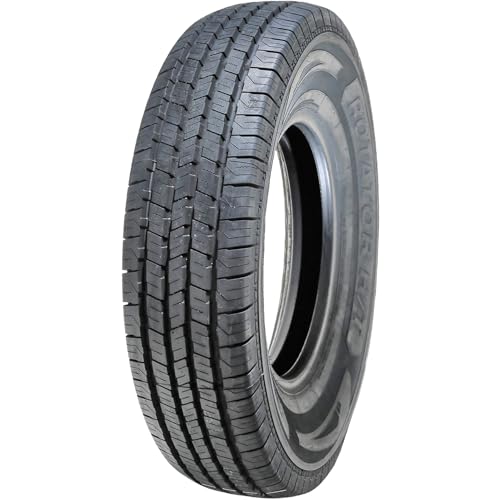
The Evoluxx Rotator H/T is positioned as an all-season highway tire for light trucks with a 10-ply build and a 55,000-mile treadwear expectation. It targets drivers who want dependable on-road performance with a tougher construction, while recognizing that aggressive off-road capabilities may be limited compared with true all-terrain tires.
Firestone Transforce HT3 LT225/75R16

The Firestone Transforce HT3 is engineered for heavy highway use with a wear-resistant tread compound. It provides solid wet traction and is designed to sustain long miles under fully loaded conditions. This tire is well-suited for buyers who frequently tow or haul and prioritize stability and durability on paved surfaces, while the all-season design may not be ideal for rugged off-road driving.
Prinx HiCountry A/T2 LT225/75R16

The Prinx HiCountry A/T2 is an all-terrain tire designed for Jeeps, light trucks, and SUVs. It offers versatile traction across wet and dry surfaces and comes with a 50,000-mile limited warranty. Choose this tire if you need confident off-road capability without sacrificing on-road stability, but expect a trade-off in road quietness compared with dedicated highway tires.
Buying Guide: Key Considerations For LT225/75R16 Tires
LT225/75R16 tires sit on a narrow spectrum between highway-only tires and rugged all-terrain options. When selecting, consider load capacity, tread design, and intended driving conditions. For light-duty trucks and SUVs used primarily on pavement, prioritize tracking, braking performance, and wear life. For vehicles used off-road or with frequent towing, choose a tire with stronger sidewall support and an all-terrain tread pattern.
- Usage profile: Highway vs. all-terrain. Highway tires focus on ride comfort and mileage; all-terrain tires prioritize traction across mixed surfaces.
- Load rating and ply count: Higher ply (e.g., 10-ply) generally means better durability and resistance to punctures.
- Treadwear and warranties: Look for miles-at-a-glance numbers and warranty terms applicable to your vehicle size and type.
- Wet and dry traction: Analyze tread patterns and siping to understand how tires perform in wet weather and dry heat.
- Noise and comfort: Some all-terrain tires produce more road noise; highway-focused tires tend to be quieter and smoother.
Frequently Asked Questions
- What does LT225/75R16 mean?
The LT indicates a light-truck tire, 225 is the width in millimeters, 75 is the aspect ratio (sidewall height as a percentage of width), and R16 means radial construction with a 16-inch wheel diameter.
- Are all LT225/75R16 tires the same for fuel economy?
No. Tire construction, tread pattern, and compound all affect rolling resistance and fuel economy. Highway tires often optimize for lower rolling resistance, while all-terrain tires may trade some efficiency for traction.
- Should I choose a 10-ply vs 8-ply tire for a light-duty truck?
Ten-ply tires offer higher load capacity and resistance to punctures, which is beneficial when carrying heavy loads or towing. If your typical load is lighter, an 8-ply option may be adequate and quieter.
- Is an all-terrain tire suitable for daily highway use?
Yes, but expect more road noise and possibly shorter tread life on paved surfaces compared to dedicated highway tires.
- How important is a warranty for LT tires?
Warranties indicate expected tread life and performance under standard conditions. They can be a helpful reference but should be evaluated alongside tread design and load rating.
- Can I mix tire brands on the same vehicle?
Mixing brands is not recommended, especially on the same axle, as it can affect handling and braking balance. If mixing is unavoidable, keep the same type (all-season or all-terrain) on each axle and rotate memory of wear.