Find the right car camera with GPS to capture your drives, protect your vehicle, and share evidence with ease. This guide highlights five reliable options, each suited to different drivers—from commuters needing solid day-to-day footage to rideshare drivers seeking robust night-vision and GPS tagging. Read on to compare capabilities, ideal use cases, and potential limitations.
| Product | Key Strength | Best For |
|---|---|---|
| REDTIGER 4K STARVIS 2 Dashcam Front Rear | 4K front, 1080P rear, built-in GPS, 5GHz WiFi | All-around clarity and real-time location data |
| 70mai A810 Lite 4K Dash Cam Front and Rear | 4K front, HDR, Wi-Fi 6 | Night-friendly footage and fast wireless transfers |
| ROVE R2-4K Dual Dash Cam | Upscaled 4K front, 1080P rear, STARVIS 2 | Sharper daytime detail and reliable night footage |
| ZMOPO 360 View 4 Channel Dash Cam | 4-channel coverage, GPS, 5G WiFi | Full-vehicle coverage and parking reliability |
| IIWEY iK7 10-Inch Wireless CarPlay Dash Cam | 10″ wireless CarPlay/Android Auto, 4K dash | Integrated infotainment and dash recording |
REDTIGER 4K STARVIS 2 Dashcam Front Rear
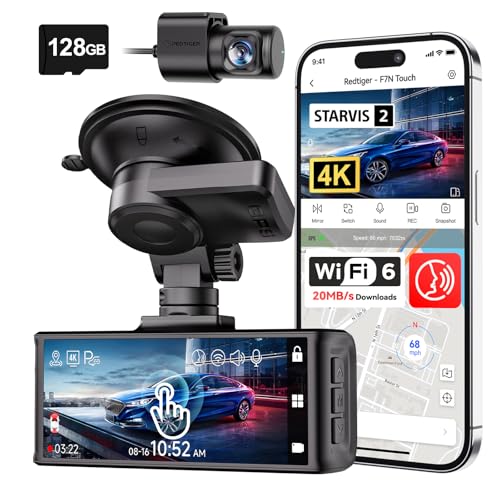
Best for: Daily drivers who want high-resolution front footage with reliable GPS tagging. The 4K front camera paired with a 1080P rear camera offers rich detail for license plates and road signs, while built-in GPS logs location and speed. This model also includes voice control and a touchscreen for quick operation, making it easy to lock emergency footage or control settings while driving. A caution: ensure adequate storage and take note that wireless speed can vary with interference in busy networks.
70mai A810 Lite 4K Dash Cam Front and Rear

Best for: Night-conscious drivers who value HDR and a fast Wi‑Fi 6 transfer. The dual-camera system records front at 4K and rear at 1080P with HDR to improve low-light detail, helping with evidence capture in dusk, tunnels, or rain. It supports remote access and GPS tracking for route data. Caution: as a dual-camera system with high resolution, storage planning is important to avoid overwriting critical footage during long trips.
ROVE R2-4K Dual Dash Cam Front and Rear

Best for: Viewers who want sharper daytime detail and solid night footage with a built-in GPS. The front camera uses a Sony STARVIS 2 sensor with upscaling to 4K for crisper images, while the rear records at 1080P. The device supports high-speed WiFi for instant downloads and sharing, plus OTA firmware updates. Caution: this is upscaled 4K, not native 4K, which means some fine details depend on the original capture and upscaling algorithm.
ZMOPO 360 View 4 Channel Dash Cam

Best for: Vehicles needing comprehensive coverage—front, rear, and both interiors—with 5G-enabled WiFi and GPS. Four cameras provide a wide field of view, useful for curbside encounters or driveway parking. This model includes time-lapse parking mode and WDR for better low-light performance. Caution: 360-degree coverage can require careful mounting to avoid blind spots and extra data storage for four streams.
IIWEY iK7 10-Inch Wireless CarPlay Screen

Best for: Drivers seeking an integrated infotainment and dash camera experience. The 10-inch wireless CarPlay/Android Auto screen supports voice control, navigation, calls, and media while recording with 4K video. Choose this if you want dashboard apps alongside camera functionality. Caution: the device size and setup require adequate dashboard space and compatible smartphone pairing for full features.
Buying Guide
How to choose a car camera with GPS that fits your needs:
- Video resolution and sensor quality: For clearer evidence, prioritize front-facing 4K or high-quality 2.5K sensors with reliable night vision. Look for STARVIS or similar sensors for low-light performance.
- GPS and data logging: Verify GPS logging accuracy for speed, location, and route data. Ensure the dash cam provides timestamped maps in the app or video metadata.
- WiFi, app, and transfer speed: Faster WiFi bands (5GHz or Wi-Fi 6) improve the speed of video transfers to your phone. OTA firmware updates can keep features current.
- Field of view: A wide front angle (around 140°–170°) helps capture license plates and road details. If you want side coverage, consider a 360° or 4-channel option.
- Parking mode and power options: If you want around-the-clock protection, ensure there is parking monitoring and a recommended power method (battery, supercapacitor, or hardwire kit).
- Ease of use: Voice control, touchscreens, and clear app interfaces reduce distraction. Ensure the unit is easy to operate while driving.
- Storage and data management: Plan for high-capacity microSD cards and consider models with loop recording to avoid filling the card.
- Size and mounting: Check the device dimensions and mounting hardware to fit your vehicle’s dash layout without obstructing visibility.
FAQ
- Can a GPS dash cam help with insurance claims? Yes, GPS data can trace location and speed, providing context for incidents.
- Is 4K dash cam footage always better? Higher resolution helps with license plate clarity in daylight, but the reliability of night footage also matters.
- Do all dash cams support parking mode? Not all models support parking mode without a hardwire kit or extra power solutions.
- What is upscaling in dash cams? Some cameras upscale front footage to 4K while recording natively in 2.5K or 1080P, which can affect perceived detail.
- Are 360-degree dash cams difficult to install? They require careful mounting to avoid blind spots and ensure interior cameras have a clear view.
- Is wireless CarPlay always necessary for Dash Cam use? It’s optional and mostly benefits infotainment; the camera’s GPS and video features work independently.